There’s a quiet hum I feel sometimes. It’s the sound of expectation meeting reality. The promise of “personal growth” whispered in my ear, and the actual, day-to-day grind of it.
We all crave it, this feeling of becoming “more” – more confident, more resilient, more at peace. But the journey… well, the journey often feels like wading through molasses. It’s heavy, it’s slow, and sometimes, you wonder if you’re even moving at all.
I remember a time when I was desperate for quick fixes. Motivational gurus, self-help books promising overnight transformations, the allure of the “hustle.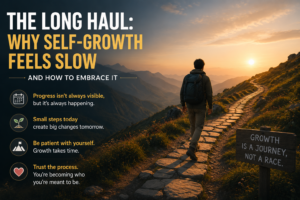 ” I’d devour these things, fuelled by a burning desire to change, to “level up.” The problem? It never lasted. The high faded, the motivation waned, and I was left with a nagging feeling of failure. It took me years to understand that the slow, often frustrating pace is the process.
It’s not a bug; it’s a feature. This is where I want to take you today: to understand the slow burn, the long haul, and how to actually embrace the reality of self-growth.
The Illusion of Instant Transformation
We live in a world of instant gratification. News cycles come and go in a blink. Food can be delivered to your doorstep in minutes. And social media bombards us with the highlight reels of other people’s lives.
It’s no wonder we expect the same speed from our inner development. We see others “achieving” and want that same feeling of accomplishment now. We fall for the seductive promises of quick fixes: affirmations, one-day retreats, and the next shiny new self-help trend.
But real, lasting change isn’t built on these foundations. It’s built on the accumulation of small, consistent actions, the willingness to face discomfort, and the understanding that setbacks are inevitable. Think of a tree.
It doesn’t become a mighty oak overnight. It starts as a tiny seed, slowly pushing roots deep into the earth, weathering storms, and absorbing sunlight. The growth is gradual, often unseen, but undeniably powerful. The Untamed Self: Taming Your Inner Chaos and Finding True Stability shows a related path.
This is where growth usually feels invisible. We focus on the “big picture” and get frustrated when we don’t see immediate results. We forget that the most significant shifts often happen beneath the surface, in the quiet moments of self-reflection, the small choices we make each day, and the slow, deliberate work of rewiring our brains and behaviors.
Why Does Self-Growth Feel So Uncomfortable?
Let’s be real: self-growth is often deeply uncomfortable. It challenges our beliefs, exposes our vulnerabilities, and forces us to confront the parts of ourselves we’d rather ignore. Think of it like a muscle.
When you work out, your muscles tear slightly. It’s painful, but that pain is essential for growth. The same is true for your mind. That “growing pain” is actually a sign you’re moving forward. It’s your brain and heart expanding.
Here are some of the uncomfortable truths you’ll likely encounter on the journey:
- Confronting Your Shadow: This is where things get really real. This means facing the aspects of yourself you keep hidden—the insecurities, the fears, the limiting beliefs. It is not always pretty.
- Breaking Free from Old Habits: Old habits die hard, as they say. Changing patterns means disrupting comfort zones. It can be a struggle.
- Dealing with Setbacks: No one is perfect. There will be stumbles, backslides, and moments of self-doubt. It’s crucial not to let these derail you.
- Uncertainty and Ambiguity: Self-growth often involves venturing into the unknown. There’s no map, no guaranteed outcome. This uncertainty can be unsettling.
Most people avoid this uncomfortable step. But avoiding it guarantees you stay stuck. The willingness to lean into this discomfort is what separates those who evolve from those who stay in the same place. It is a sign you are evolving.
The Anatomy of Real Growth: Internal Shifts and Habits
So, if it’s not about quick fixes, what does real growth look like? It’s a combination of internal shifts and the cultivation of healthy habits. Here’s a breakdown of what that looks like:
Internal Shifts:
- Self-Awareness: This is the foundation. It involves understanding your thoughts, feelings, and behaviors. This includes noticing patterns, triggers, and biases. Start a journal. Meditate daily. Simply ask yourself, “Why am I feeling this way?”
- Self-Compassion: Treat yourself with the same kindness and understanding you would offer a friend. Recognize that you’re human and that mistakes are part of the process. Forgive yourself.
- Mindfulness: This involves being present in the moment, without judgment. It helps you become less reactive and more responsive to life’s challenges. You can start with simple things such as mindful breathing exercises or eating your food with full attention.
- Resilience: This is your ability to bounce back from setbacks. It involves developing coping mechanisms, learning from mistakes, and maintaining a positive outlook. This is not about being tough; it is about being strong.
Healthy Habits:
- Consistency: Small, consistent actions are the key. Build habits that support your goals. Do a small amount every day.
- Patience: Remind yourself that growth takes time. Celebrate small victories and don’t get discouraged by setbacks.
- Self-Care: Prioritize your physical and emotional well-being. This includes healthy eating, exercise, sufficient sleep, and activities that bring you joy.
- Learning: Commit to continuous learning. Read books, take courses, and seek out new experiences that expand your horizons.
Common Mistakes That Sabotage Self-Growth
The path to personal evolution is paved with potholes. Knowing what to avoid can be as crucial as knowing what to do. Here are some of the most common pitfalls:
- Perfectionism: Striving for perfection sets you up for failure. It’s far better to aim for progress than perfection. Accept that you will make mistakes and learn from them.
- Comparison: Don’t compare yourself to others. Everyone is on their own unique journey. Focus on your own progress and celebrate your own successes.
- Procrastination: Putting things off creates a cycle of avoidance and regret. Break tasks down into smaller steps and take action, even when you don’t feel like it.
- Giving Up Too Soon: Growth takes time and effort. Don’t get discouraged by setbacks. Persist. Keep going.
- Ignoring Your Needs: Neglecting your physical and emotional well-being will hinder your progress. Prioritize self-care.
- Expecting Overnight Results: As we have discussed, lasting change is not instant. Be patient with yourself.
Busting Myths: The Truth About Self-Growth
The self-help world is often filled with myths. Let’s debunk some of the most common ones:
- Myth: You Need Massive Motivation: The truth is that motivation is fleeting. Discipline and consistent action are far more reliable.
- Myth: Self-Growth is a Linear Process: Life isn’t linear. There will be ups and downs, forward steps and backward slides. Embrace the ebb and flow.
- Myth: You Can “Fix” Yourself: You don’t need to be fixed. The goal isn’t to become a perfect version of yourself, but to become a more authentic and whole version.
- Myth: External Validation is Key: While it’s nice to get approval, true growth comes from within.
The Long-Term Impact: Peace, Confidence, and Better Decisions
The rewards of embracing the slow burn are profound. The benefits aren’t just about feeling “good.” They transform your life on a fundamental level.
- Inner Peace: As you become more self-aware and accepting, you experience less inner turmoil and more contentment.
- Increased Confidence: As you navigate challenges and overcome obstacles, your self-esteem grows.
- Improved Decision-Making: You become less reactive and more thoughtful in your choices.
- Stronger Relationships: As you grow, you also start to communicate better.
- Greater Resilience: You develop the ability to bounce back from setbacks and adapt to change.
Relevance in Today’s World (2025-2026): The Need for Adaptability
The world is changing at an unprecedented pace. The pressures of social media, economic uncertainty, and global events can feel overwhelming. In this environment, self-growth is not just a personal pursuit; it’s an essential skill. In 2026, the ability to adapt, learn, and maintain your well-being is not optional. It is essential. Your ability to evolve becomes your strongest asset.
Future Outlook: Maturity, Awareness, and Adaptability
Looking ahead, the path of self-growth points toward a future where maturity is defined by emotional intelligence, and awareness extends beyond the self to encompass the world around us. Adaptability will be the cornerstone of a fulfilling life. This is not about achieving some elusive state of perfection. It’s about a continuous journey of self-discovery, resilience, and connection.
FAQ: Your Burning Questions About Self-Growth Answered
Here are some frequently asked questions to clear the air about the process:
- Why does self-growth feel so slow?Because it is a gradual process of rewiring your brain, changing deeply ingrained habits, and building new neural pathways. It’s not a race; it’s a marathon.
- How do I stay motivated when I’m not seeing results?Focus on consistency, not motivation. Build habits and celebrate small victories. Also, remember your ‘why’ – the reasons you are doing this in the first place.
- What if I keep making the same mistakes?It’s okay. We all do. The key is to learn from your mistakes, adjust your approach, and keep trying. Be kind to yourself.
- How do I deal with the discomfort of self-growth?Acknowledge the discomfort, and try to lean into it. This feeling is a sign that you are moving forward. Practice self-compassion and remind yourself that it’s worth it.
- Is it okay to seek help?Absolutely. Talking to a therapist, coach, or trusted friend can provide valuable support and guidance. We all need help sometimes. Jamgro has information on this.
- How do I measure my progress?Focus less on outcomes and more on the process. Notice any small shifts. Keep a journal to track your thoughts and feelings. Celebrate any victories along the way. Your progress is measured not by how fast you change, but how honest you are with yourself.
- How do I avoid burnout?Prioritize self-care, set realistic goals, and take breaks when needed. Don’t push yourself too hard. Growth should energize you, not drain you.
- What if I don’t know where to start?Start small. Choose one area of your life you want to improve, and take one tiny step. The most important thing is simply to begin.
The journey of self-growth is a winding road. There will be bumps, detours, and moments when you question your path. But it’s a journey worth taking. Embrace the slow burn, celebrate the small victories, and trust in the process. You are already growing. You are already becoming.