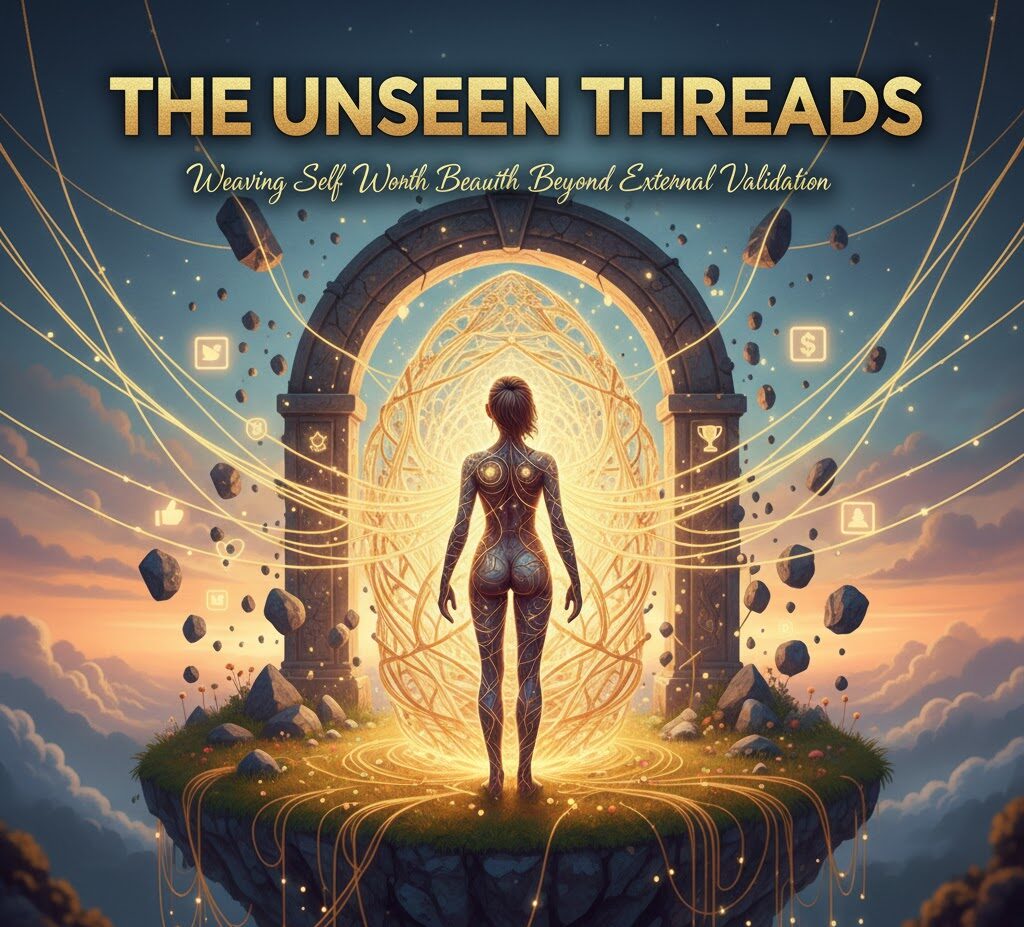
There are seasons in life when you feel it, a subtle yet insistent nudge from within. It’s not always a dramatic crisis, but a quiet recognition that the path you’re on, or the version of yourself you’ve been embodying, no longer quite fits.
It’s like wearing a favorite sweater that’s become a size too small, or perhaps a style that feels decidedly out of sync with who you’re becoming. This feeling, this gentle friction, is often the precursor to profound self-growth. But growth, as I’ve learned over many years of navigating my own internal landscapes and witnessing countless others, rarely feels like a smooth, upward trajectory. More often, it’s a disorienting, sometimes painful, process of shedding. It’s about unbecoming, in order to truly become.
We live in a world that often celebrates arrival – the promotion, the milestone, the perfected version of ourselves. But the real magic, the deep, resonant evolution, happens in the messy middle, in the shedding of old skins, old beliefs, and old habits that no longer serve us.
This is where growth usually feels invisible, like the quiet, unseen work of roots deepening beneath the soil. It’s uncomfortable because it requires us to confront the parts of ourselves we’ve grown accustomed to, the familiar patterns that, despite their limitations, offer a semblance of security.
Think about it: how often do we try to add more onto an already full plate, rather than clearing space? We seek new knowledge, new experiences, new relationships, hoping they’ll magically transform us.
But true transformation often begins not with addition, but with subtraction. It’s about asking, “What do I need to let go of?” This could be an outdated belief about your capabilities, a relationship that drains your energy, a habit that offers fleeting comfort but
long-term detriment, or even an identity that was once essential but has now become restrictive. This process of unbecoming isn’t about destruction; it’s about discernment. It’s the wise gardener pruning back the dead branches to allow new life to flourish.
The Discomfort of Unbecoming
The discomfort arises because unbecoming challenges our sense of identity. Who are we without that old job title, that long-held opinion, that familiar way of reacting?
It can feel like standing naked in a crowded room. There’s a vulnerability that comes with releasing what you’ve defined yourself by. This is where growth usually feels invisible
as the internal work of acceptance and redefinition is rarely dramatic. We might feel confusion, a sense of being adrift, because the old anchors are loosening their grip, and the new ones haven’t fully taken hold.
This is especially true in the current emotional and social environment of 2025-2026. The relentless pace of change, amplified by digital interconnectedness, often creates a pressure to constantly present a polished, evolving self.
We see curated highlights of others’ journeys and can fall into the trap of comparison, feeling inadequate if our own process isn’t as linear or visible. This pressure can make the quiet, internal work of unbecoming seem less valid, less urgent.
But ironically, it’s precisely in this noisy, demanding landscape that the ability to shed the inessential becomes a superpower for resilience and clarity. It allows us to respond to the world from a place of inner substance, rather than reactive noise.
Most people avoid this uncomfortable step of unbecoming because it requires courage. It’s easier to layer on new habits, new skills, new philosophies, hoping they’ll overwrite the old. We might join countless courses, read stacks of self-help books, or chase after fleeting trends, all while clinging to the very things that are holding us back.
This isn’t growth; it’s just rearranging the furniture in a room that needs clearing out entirely. The real growth begins when we have the honesty to look at our patterns – the emotional reactions, the thought loops, the behavioral tendencies – and ask, “Is this truly serving me anymore?”
So, how do we actively engage in this process of unbecoming? It’s not a one-time event, but a continuous practice, a way of living. It begins with cultivating a deeper sense of self-awareness.
This means paying attention, without judgment, to your thoughts, feelings, and actions. What triggers you? What brings you a sense of peace? What patterns keep repeating themselves, even when you consciously try to break them?
One of the most powerful tools I’ve found is journaling. It’s not about writing eloquent prose, but about honest dialogue with yourself. Write down your confusions, your frustrations,
your small victories. Ask yourself tough questions: “Why did I react that way?” “What am I afraid of losing if I change this?” This personal exploration helps to untangle the roots of our attachments.
It’s like shining a light into the corners of our inner world, revealing what needs to be swept out. This is the foundation for the unfolding journey of cultivating your inner compass. The Unfolding Journey: Cultivating Your Inner Compass offers a deeper dive into this vital skill.
Another crucial step is to practice mindful detachment. This doesn’t mean becoming emotionless or indifferent. It means learning to observe your emotions and thoughts without being swept away by them.
When a familiar negative thought arises, instead of automatically believing it or acting on it, can you observe it? Can you acknowledge it as a past pattern, a mental habit, rather than an absolute truth? This practice of mindful observation is key to breaking free from the automatic pilot of our conditioning.
Setting boundaries is also an integral part of unbecoming. This can be incredibly difficult, especially for those who have a strong people-pleasing tendency or a deep-seated fear of conflict.
But boundaries are not walls to keep others out; they are clear lines that define your own space and energy. They protect your inner resources, allowing you to grow without being constantly depleted. Learning to say “no” to things that drain you, and “yes” to what nourishes you, is a powerful act of self-preservation and growth.
Finally, embrace imperfection. We often hold ourselves to impossible standards, believing that growth means becoming flawless. This myth of perfection is a major roadblock.
Unbecoming involves acknowledging that mistakes are part of the process. They are not failures, but feedback. When you stumble, the crucial part isn’t that you fell, but that you choose to get back up, learn from the experience, and adjust your course. This resilience, born from accepting your human fallibility, is far more valuable than an unattainable ideal.
Busting Self-Growth Myths
There are so many myths swirling around self-growth that can mislead us, making the journey feel harder than it needs to be. One of the biggest is the idea of overnight transformation.
We see dramatic before-and-after stories and assume change is instantaneous. The reality, honed through decades of personal experience and observation, is that deep, lasting change is incremental. It’s built through small, consistent actions and internal shifts that accumulate over time. This belief in the “long haul” is essential for sustained progress.
Another pervasive myth is that you need to be constantly motivated. Motivation is a fickle friend. It comes and goes, often driven by external factors or fleeting feelings.
Relying solely on motivation for growth is like building a house on sand. Discipline, on the other hand, is the steady hand that keeps the work going, even when motivation wanes. Discipline isn’t about force or punishment; it’s about commitment. It’s about showing up for yourself, day after day, even when you don’t feel like it. This is the quiet revolution that cultivates inner strength.
The idea that self-growth should always feel good is also a damaging myth. While moments of insight and breakthrough can be exhilarating, much of the process involves facing discomfort,
confronting fears, and working through old emotional baggage. If growth always felt easy, everyone would be doing it, and everyone would be transformed. The challenges you face are not signs you’re doing it wrong; they are often signs you are doing it right, pushing the boundaries of your comfort zone and expanding your capacity. It’s in these moments of facing difficulty that genuine maturity begins to take root.
The Long-Term Impact: Peace, Confidence, and Clarity
As you gradually learn to unbecoming, to shed the layers that no longer serve you, something remarkable happens. A sense of inner peace begins to settle. This isn’t the absence of problems,
but a profound shift in your relationship with them. You develop a greater capacity to navigate life’s inevitable storms without being capsized. This peace is hard-won, forged through the fires of self-discovery and the courage to let go.
Confidence blossoms, not from external validation or a fabricated sense of superiority, but from a deep, quiet knowing of your own resilience and worth.
You become more comfortable in your own skin, less swayed by the opinions of others or the pressures of societal expectations. This authentic confidence allows you to stand firm in your values and make decisions that are aligned with your true self, rather than seeking approval.
Decision-making becomes clearer. When you’ve done the work of unbecoming, you have a better understanding of what truly matters to you.
The noise of distractions, the allure of fleeting pleasures, the pressure to conform – these fade in significance. You can discern the signal from the noise, making choices that lead you closer to your authentic path, rather than further away. This clarity is a gift that unfolds as you strip away the extraneous, revealing the core of who you are and what you desire.
Looking towards the future, the maturity that comes from this continuous process of unbecoming and growth is essential. Adaptability is no longer a buzzword, but a lived reality.
In a world that continues to evolve at an astonishing pace, the ability to shed old ways of thinking and being, to remain open to new learning, and to adapt with grace, becomes paramount. This inner flexibility, this willingness to embrace change, is the hallmark of a truly evolved individual. It ensures that your personal evolution remains a dynamic, ongoing dance, rather than a static destination.
Why does self-growth feel so slow and difficult?
Self-growth is often slow and difficult because it involves rewiring deeply ingrained patterns of thought, emotion, and behavior. It requires confronting discomfort, facing fears, and letting go of familiar comforts. True transformation is an organic process, much like a plant growing, which takes time and consistent nurturing, rather than an instant event.
How do I know if I’m truly growing or just changing my behavior superficially?
Genuine growth goes beyond surface-level changes. It involves shifts in your inner landscape – your beliefs, values, self-awareness, and emotional regulation. If you find yourself reacting to challenges with more understanding and less reactivity, making decisions aligned with your core values, and feeling a deeper sense of inner peace, you’re likely experiencing true growth. Superficial changes often crumble under pressure.
What are common mistakes people make when trying to grow?
Common mistakes include relying solely on motivation, avoiding discomfort, seeking external validation, setting unrealistic expectations (like overnight success), and not practicing self-compassion. Many also focus on adding more to their lives rather than clearing out what no longer serves them, which is crucial for real unbecoming and growth.
Is it possible to get stuck in self-growth?
Yes, it’s possible to get stuck, often by becoming overly attached to a particular method, ideology, or even the idea of “perfect” growth. It can also happen when we intellectualize growth without integrating it into our daily lives or when we resist the uncomfortable phases of unbecoming. Recognizing stagnation is the first step to moving forward again.
How can I cultivate self-awareness without being overly critical of myself?
Cultivate self-awareness with curiosity and kindness, much like observing a fascinating subject. Instead of judging yourself for certain thoughts or feelings, simply notice them. Ask “What is this feeling telling me?” rather than “Why am I so bad for feeling this?” Journaling, mindfulness, and seeking feedback from trusted sources can help, provided it’s done with a gentle, non-judgmental attitude.
When should I seek external help for my personal growth journey?
Seeking external help, whether from a therapist, coach, or mentor, can be invaluable when you feel stuck, overwhelmed, or when certain patterns consistently sabotage your progress. If you’re experiencing significant emotional distress, or if you simply desire a more guided and accelerated path, reaching out is a sign of strength, not weakness.
How does unbecoming help me become more resilient?
Unbecoming builds resilience by teaching you that your identity is not tied to external circumstances or specific roles. When you let go of rigid definitions of yourself, you become more adaptable. You learn that you can shed old ways of being and adopt new ones, proving to yourself that you can navigate loss, change, and uncertainty without falling apart. This process strengthens your inner core.
What’s the difference between personal growth and self-improvement?
Self-improvement often focuses on acquiring skills or optimizing existing behaviors to achieve specific external goals (e.g., getting a promotion, learning a new language). Personal growth, or self-growth, is a deeper, more holistic process of inner development, encompassing emotional maturity, self-awareness, a refined sense of identity, and a more profound understanding of oneself and one’s place in the world. While self-improvement can be a part of personal growth, personal growth aims for fundamental internal evolution.