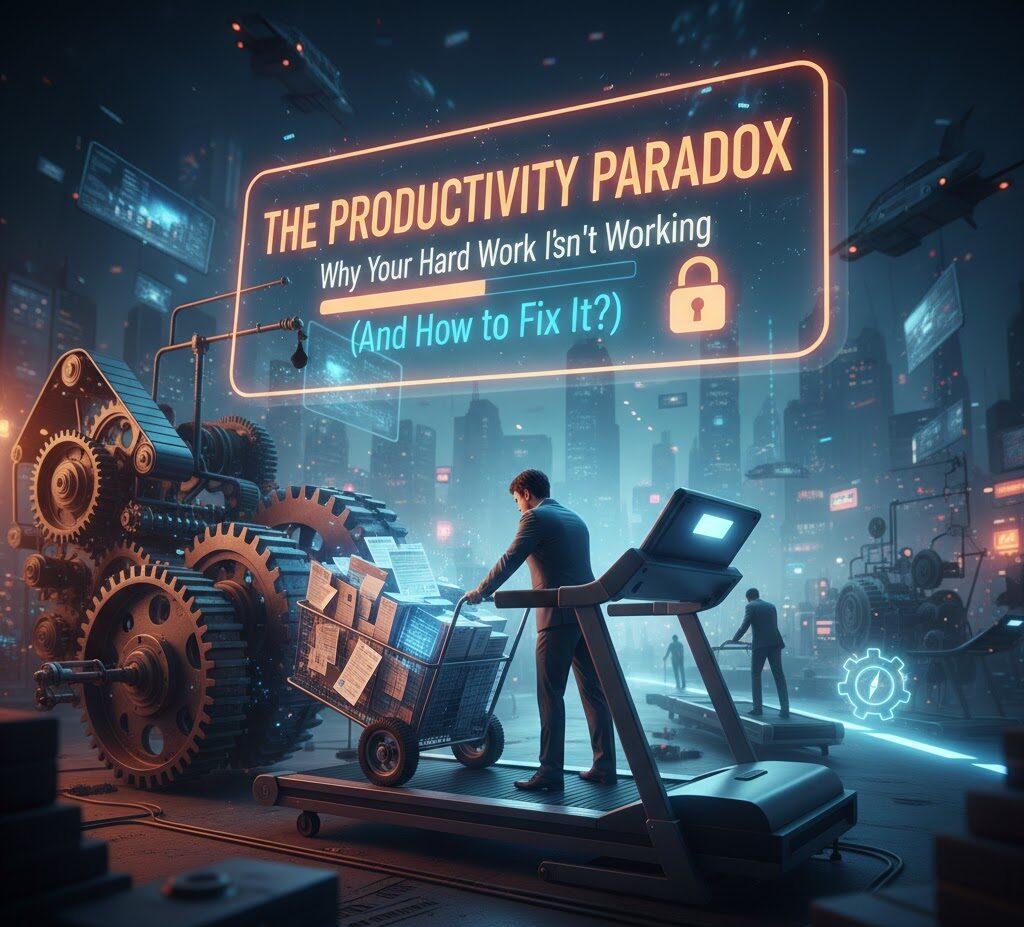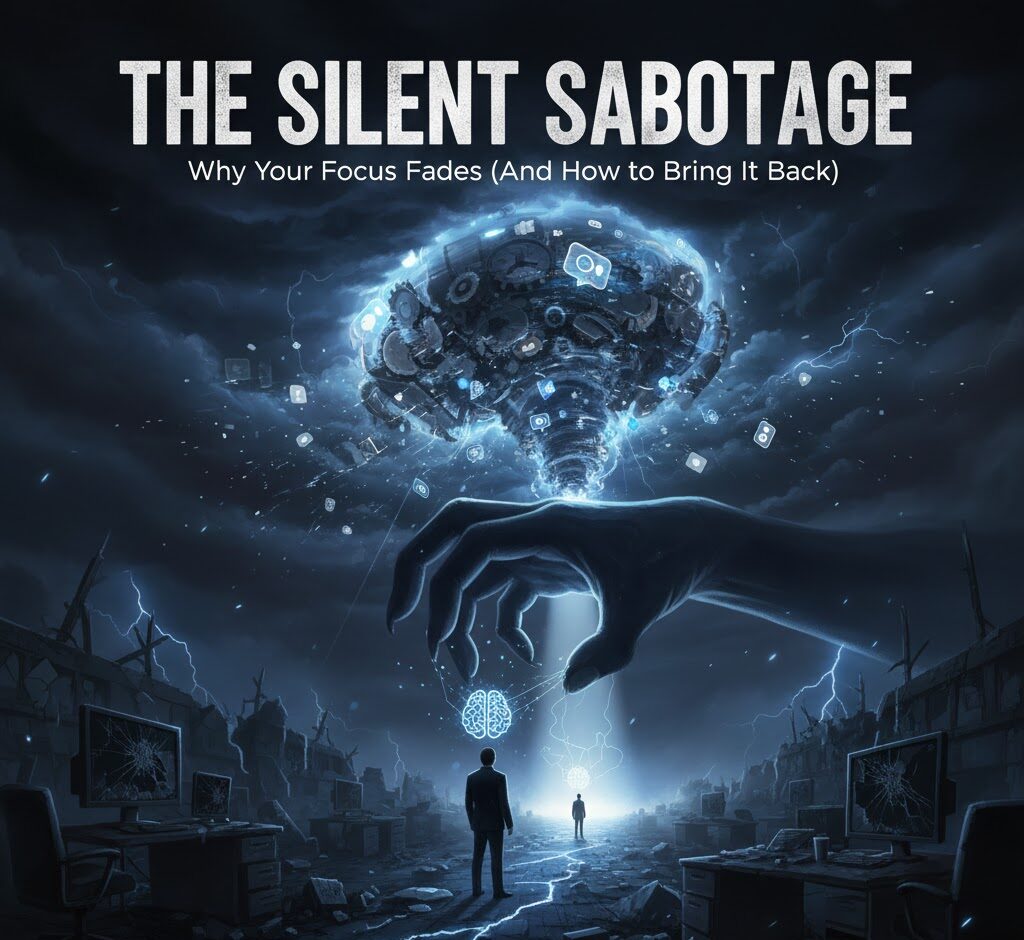
I know the feeling. You wake up, already behind. A mountain of emails stares you down, the to-do list is a mile long, and the pressure to *do* more, *achieve* more, feels like a physical weight. So, you hit the ground running. You jump into action, determined to conquer the day. But by midday, you’re burnt out, unfocused, and wondering where all your energy went. Sound familiar?
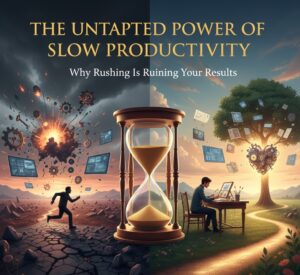
This is where “fast” productivity fails. It’s the constant chase, the relentless push to squeeze every last drop of output from yourself. It’s the “hustle harder” mantra that’s become a twisted badge of honor in today’s world. But what if I told you that the key to lasting productivity isn’t speed, but something much slower and more deliberate?
The Trap of Constant Motion
We’re living in an era of information overload and relentless connectivity. We’re bombarded with notifications, demands, and the constant pressure to be “on.” This environment breeds a culture of urgency, where we mistake activity for achievement. We mistake being busy for being productive. The problem? This constant motion often leads to:
- Shallow Work: Rushing through tasks means we don’t have time for deep thinking or focused effort. We end up doing things quickly, but not necessarily well.
- Increased Errors: When you’re constantly rushing, you’re more likely to make mistakes. These errors take time to fix and erode your progress.
- Decision Fatigue: Each task is a decision, and when you’re constantly making decisions in a rushed state, you deplete your mental resources, leaving you feeling drained and less capable of making smart choices later in the day.
- Burnout: The relentless pace and pressure take a toll. You end up exhausted, stressed, and ultimately, less productive in the long run.
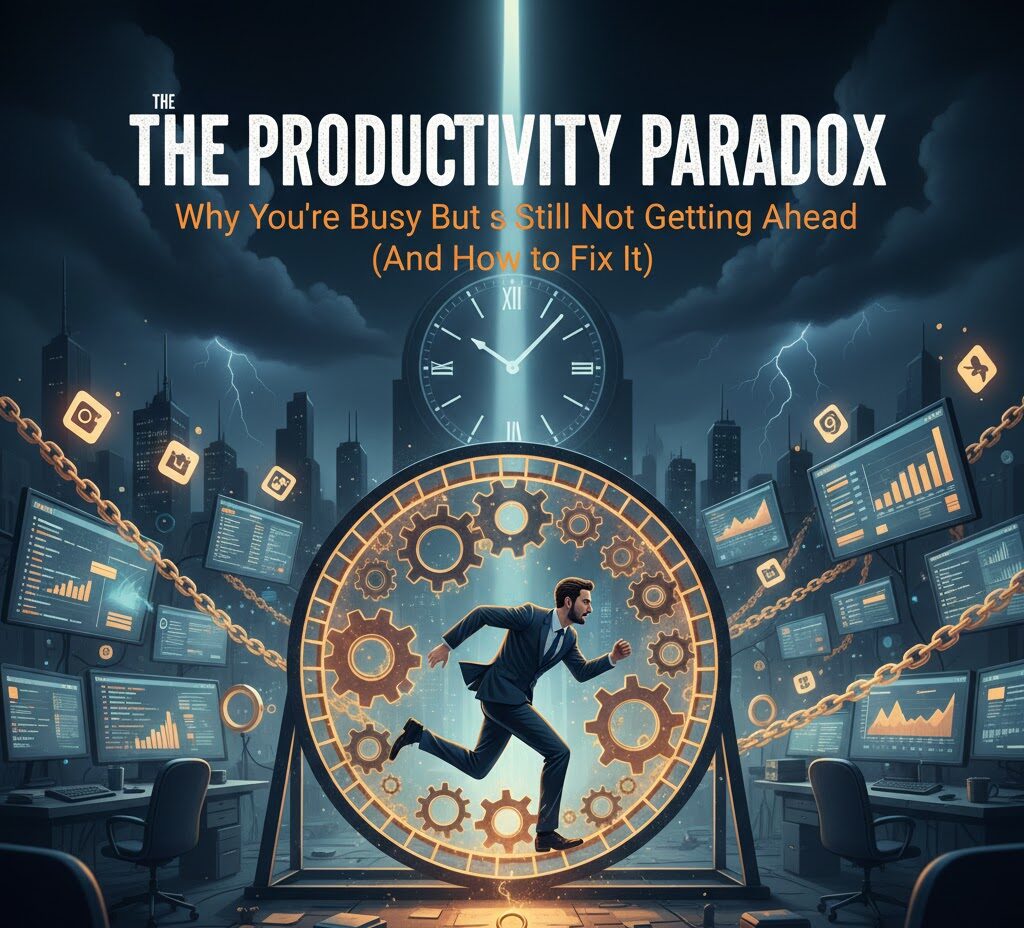
This is the insidious cycle of “fast” productivity. It feels like you’re doing a lot, but you’re stuck in a hamster wheel, expending energy without making real progress. So, how do we break free?
Enter “Slow Productivity”: Your Secret Weapon
Slow productivity isn’t about laziness or inaction. It’s about being *intentional* with your time and energy. It’s about choosing a pace that allows for focus, depth, and sustainable results. Think of it as the art of working smarter, not harder.
Here’s how to embrace slow productivity in your daily life:
1. Prioritize, Really Prioritize
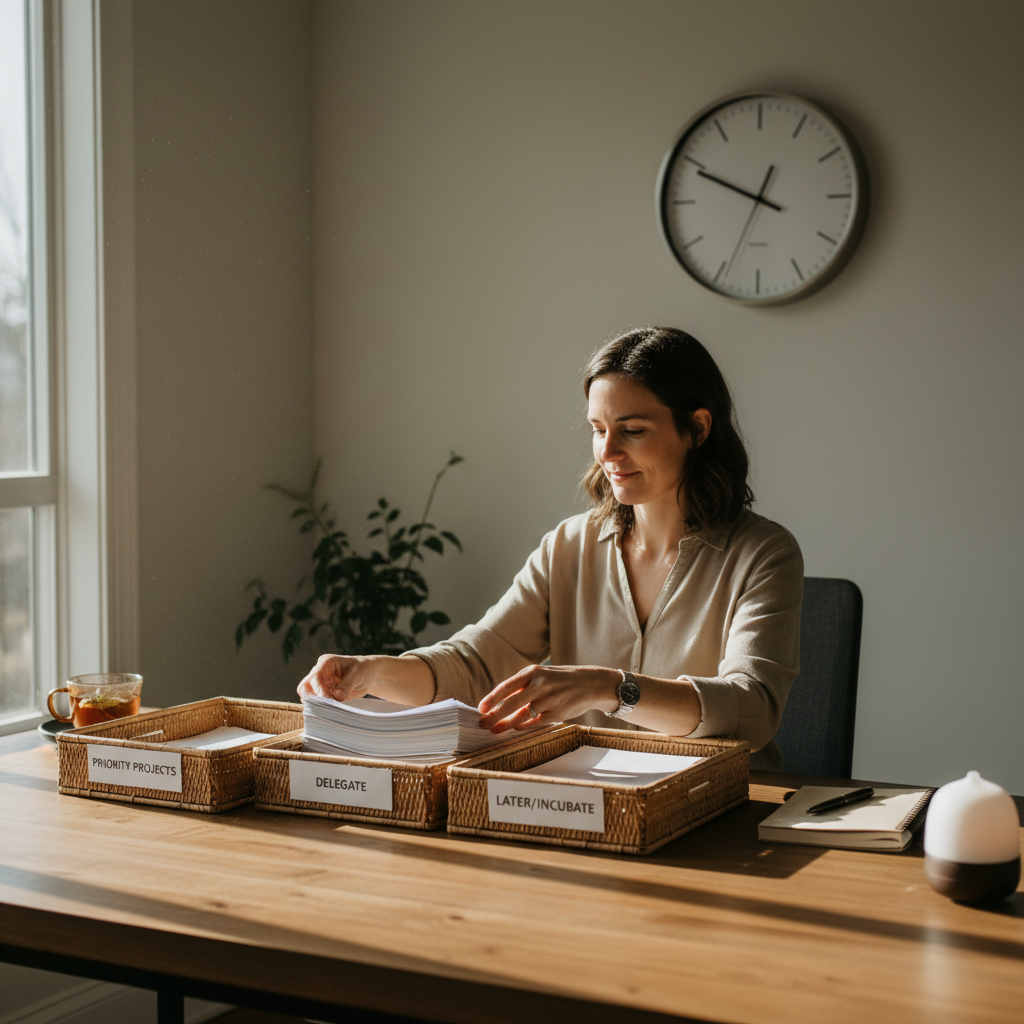
Forget the endless to-do lists. Instead, focus on the 1-3 most important tasks (MITs) that will move the needle forward. Ask yourself: What will make the biggest difference today? Once you’ve identified your MITs, structure your day around them. This is the bedrock of productivity. Don’t let anything else distract you until they are done.
2. Time Blocking: Your Secret Weapon for Focus
Allocate specific blocks of time for your MITs. Treat these blocks like appointments you can’t miss. This helps you protect your time and minimize distractions. If you find yourself struggling with focus, try the Pomodoro Technique: Work in focused 25-minute intervals with short breaks in between. This is one of the most effective tactics for a focused workday.
3. Embrace “Deep Work”
This is where real results are made. Deep work is the ability to focus without distraction on a cognitively demanding task. It’s the state of flow, where you’re fully immersed in your work. Identify the times of day when you’re most alert and schedule your deep work sessions then. Turn off notifications, close unnecessary tabs, and create an environment conducive to concentration. This will transform how you work.
4. Schedule “Buffer Time”
This is where many people fall short. Build in extra time between tasks and meetings. This buffer allows you to transition smoothly, avoid feeling rushed, and handle unexpected issues without throwing your entire schedule off balance. Unexpected things happen; buffer time is your friend. This can make the difference between a day feeling chaotic and one where you maintain your focus.
5. Practice Deliberate Rest
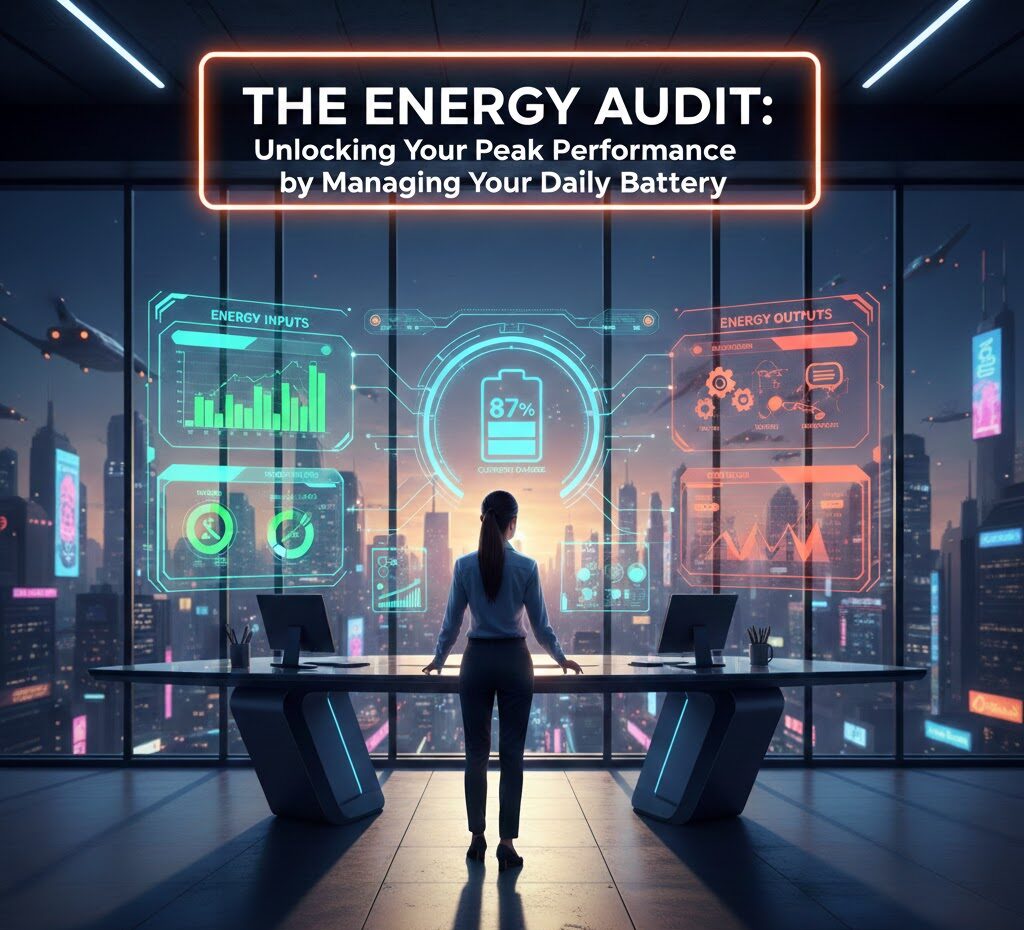
Rest is not the enemy of productivity; it’s its ally. Schedule regular breaks throughout the day. Step away from your desk, stretch, go for a short walk, or simply close your eyes and breathe. Getting enough sleep is also a non-negotiable part of “slow” productivity. When you rest, your brain consolidates information, processes emotions, and prepares you for peak performance. Think of it as charging your battery.
6. Single-Tasking: The Antidote to Multitasking
Multitasking is a myth. Our brains aren’t designed to effectively handle multiple tasks simultaneously. When you try to do too many things at once, your focus scatters, your efficiency plummets, and your stress levels skyrocket. Make a conscious effort to focus on one task at a time. The results will surprise you.
7. Review and Reflect
At the end of each day or week, take time to review your progress. What did you accomplish? What did you learn? What could you do differently next time? This reflection is essential for continuous improvement. If something is not working, don’t be afraid to adjust your approach. Slow productivity is not about rigid adherence to a plan but about constant adaptation and improvement.
Common Productivity Mistakes to Avoid
Even with the best intentions, it’s easy to fall back into old habits. Here are some common mistakes to watch out for:
- Over-scheduling: Cramming your calendar with back-to-back meetings and tasks leaves no room for unexpected events or deep work.
- Ignoring Breaks: Skipping breaks to “get more done” actually leads to burnout and reduced productivity.
- Chasing Shiny Objects: Constantly switching between different tools, apps, or strategies without giving them a fair chance.
- Perfectionism: Aiming for flawless results instead of focusing on consistent progress.
- Neglecting Your Health: Not prioritizing sleep, exercise, and nutrition. Your body and mind are your most important tools.
The Long-Term Impact of Slow Productivity
Embracing slow productivity isn’t just about getting more done today; it’s about building a sustainable, fulfilling lifestyle. Here’s how it impacts your long-term performance, income, and mental health:
- Increased Focus and Creativity: When you free yourself from the tyranny of constant busyness, you create space for deeper thought, creativity, and innovative problem-solving.
- Improved Quality of Work: Slow productivity leads to fewer errors, higher-quality output, and more impactful results.
- Reduced Stress and Burnout: By creating a more balanced approach to work, you protect your mental and physical health.
- Greater Job Satisfaction: When you feel in control of your time and energy, you’re more likely to enjoy your work.
- Increased Income Potential: Focus, quality, and creativity lead to better results, opening doors to new opportunities.
The Future of Sustainable Productivity
In the coming years, we’ll see a shift away from the “always-on” culture. The future of productivity lies in:
- Mindfulness and Self-Awareness: Understanding your own rhythms, energy levels, and triggers.
- Emphasis on Deep Work: The ability to concentrate and focus will become an even more valuable skill.
- Technology as a Tool, Not a Master: Using technology to enhance your productivity, not overwhelm you.
- Prioritizing Well-being: Recognizing that mental and physical health are the foundations of all productivity.
The core concept will remain the same. The principles of slow productivity will be central to that future.
FAQ: Your Questions About Slow Productivity Answered
Here are some frequently asked questions to clarify how to make slow productivity work for you:
Q: Is slow productivity just another form of procrastination?
A: Absolutely not. Procrastination is avoiding necessary tasks. Slow productivity is about making a conscious decision about how to spend your time to maximize your output and protect your well-being. Procrastination is about avoidance; slow productivity is about intention.
Q: How do I deal with a boss or colleagues who expect constant availability?
A: This requires open communication. Explain your approach and how it helps you deliver better results. If possible, set boundaries and establish clear communication channels. If they resist, you may want to consider other career options.
Q: What are some good tools to support slow productivity?
A: There are many, but the best tools are often the simplest. Consider a time-blocking calendar, a distraction-free writing app, and a task management system that focuses on your MITs. Remember that the tool is only as good as the user.
Q: How do I balance slow productivity with urgent deadlines?
A: Urgent deadlines require focused effort and prioritization. Slow productivity principles still apply. Identify your MITs, time-block your schedule, and minimize distractions. If necessary, allocate more time to deep work sessions during crunch time.
Q: How do I stop feeling guilty when I take breaks?
A: Recognize that breaks are essential for recharging your energy and improving your performance. They are not a sign of laziness but an investment in your productivity. Remind yourself that breaks are part of the process, not an interruption.
Q: How can I deal with the temptation to multitask?
A: Make a conscious decision to focus on one task at a time. Turn off unnecessary notifications, close distracting tabs, and create a focused work environment. With practice, you’ll find that single-tasking is far more effective than multitasking.
Q: What if I’m already overwhelmed and feel like I don’t have time to implement these strategies?
A: Start small. Choose one or two slow productivity techniques and gradually incorporate them into your routine. Even small changes can make a big difference over time. Remember, it’s a marathon, not a sprint.
Q: How can I use “slow productivity” to become a “problem-solving powerhouse?”
A: Slow productivity gives you the time and space to think deeply about problems, analyze root causes, and develop effective solutions. The focused attention and reduced stress that come with slow productivity allow you to approach challenges with greater clarity and creativity. This approach is key to developing your problem-solving skills, and can be further supported by strategies such as those found here: The Hidden Skill That Pays: How to Become a Problem-Solving Powerhouse.
Q: Is it possible to be truly productive without sacrificing personal life?
A: Yes. By being intentional about your time and energy, you can achieve a healthy balance between work and life. Slow productivity allows you to be more efficient during work hours, leaving more time and energy for your personal life. Being productive is not about doing everything, but about doing the most important things well. The principles described on Jamgro can provide further support for striking a balance between productivity and a fulfilling life.
Slow productivity is not a quick fix. It’s a fundamental shift in how you approach your work and your life. It’s about recognizing that rushing doesn’t equal results. By slowing down, being intentional, and focusing on what truly matters, you can achieve lasting productivity, reduce stress, and create a more fulfilling and successful life.