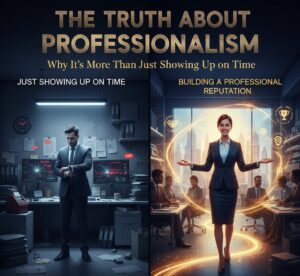
I’ve seen it a thousand times. Bright-eyed grads fresh out of college, seasoned professionals looking for a change, and everyone in between, all thinking they know “professionalism.” They think it’s about the right clothes, a firm handshake, and maybe not saying “like” too much. But real-world experience has taught me something very different. Showing up on time and dressing up are just the starting points. True professionalism is a whole different beast.
The Career Killer: Thinking Professionalism is a Checklist
The biggest mistake I see, and this is a career killer, is treating professionalism as a checklist. You know, the one they hand out in those “How to Succeed at Your First Job” seminars. “Be punctual. Dress well. Communicate clearly.” Blah, blah, blah. It’s not that those things are unimportant. They are table stakes, the minimum you need to get in the game. But they won’t get you ahead.
 I have worked as a hiring manager and career coach for over 20 years. I have seen hundreds of resumes and conducted thousands of interviews. One of the most common complaints from employers is the lack of “professionalism” among younger candidates. What they’re often *really* talking about is a lack of understanding of workplace dynamics, respect for time and colleagues, and a proactive approach to challenges.
Here’s the thing: Skills look great on resumes, but they often break down at work. You might have all the technical skills in the world, a degree from a top university, and a sparkling LinkedIn profile. But if you can’t navigate the unspoken rules of the workplace, you’re going to struggle.
What “Professionalism” REALLY Means in 2026
In 2026, the hiring landscape is constantly evolving. Remote work is the norm in many industries, and side hustles and freelancing are a common reality. To stand out, you need more than just ticking boxes. Here’s what “professionalism” *actually* looks like in today’s (and tomorrow’s) workplace.
1. Proactive Problem-Solving: The Silent Skill
Forget waiting to be told what to do. Professionalism is about anticipating problems *before* they become crises. I’m talking about taking initiative, identifying potential roadblocks, and suggesting solutions, even if it’s not explicitly part of your job description. This is where most candidates fail and this skill is incredibly important.
I’ve seen countless instances where an employee could have prevented a major issue simply by speaking up. They saw the warning signs but kept quiet, waiting for someone else to take action. Hiring managers notice this immediately. They want people who can think on their feet, use their initiative, and solve problems, not just create them.
I’ve had a lot of clients tell me that they don’t know how to demonstrate this kind of proactive attitude. They are used to waiting for direction. My best advice? Start small. See a process that can be improved? Suggest it. Notice a potential issue in a project? Bring it up. Even if it’s not perfect, the effort counts. You’ll be surprised at how much respect you get for proactively solving problems.
2. Mastering the Art of Communication
I’m not talking about fancy words and impressive vocabulary. Clear, concise communication is king. It’s about getting your point across, whether you’re writing an email, giving a presentation, or just chatting in the break room.
This includes knowing your audience, choosing the right medium (email, phone, in-person), and actively listening. You also need to be able to communicate bad news, give constructive feedback, and navigate difficult conversations. I’ve often said that even the most brilliant idea can die in the workplace because the person can’t communicate it effectively.
Here’s a hidden skill: the ability to *listen* and *understand*. It is much more important than talking. So many young professionals think that being “professional” is talking over people. That’s just being rude. Asking questions to clarify, summarizing what you’ve heard, and showing that you understand are critical skills. It shows that you value others’ opinions and you’re not just waiting for your turn to speak.
3. Time Management and Respect
Punctuality is a starting point, not the destination. True professionals understand the value of their time and others’ time. This means prioritizing tasks, meeting deadlines, and managing your workload effectively.
It also means being organized and prepared. Have your materials ready for meetings, respond to emails promptly, and follow through on your commitments. Respecting other people’s time means understanding that a last-minute cancellation, a missed deadline, or being unprepared is unprofessional.
In a world of constant digital distractions, the ability to focus and manage your time is invaluable. This means turning off notifications, scheduling your day, and protecting your work time.
4. Adaptability: The Only Constant
Change is the only constant, right? In the workplace, this means being open to new ideas, willing to learn new skills, and adapting to different situations. Technology evolves at a breakneck pace, companies restructure, and job roles change. The only people who survive and thrive are those who embrace change.
Think about the rise of AI. Those who are resistant or who see it as a threat will struggle. Those who learn how to use it as a tool, who adapt to the new realities, will have a huge advantage. Adaptability is about having a growth mindset – the belief that you can learn and grow, regardless of the situation.
This is where your attitude makes all the difference. Someone with a fixed mindset will see change as a challenge, something to be avoided. A growth mindset views change as an opportunity to learn, to grow, and to improve. The ability to navigate change, and embrace it, is essential for professional survival.
5. Owning Your Mistakes: It’s Not About Being Perfect
We all make mistakes. The difference between a professional and someone who is merely “employed” is how they handle them. Taking responsibility for your actions, owning your errors, and learning from them is what separates the wheat from the chaff.
Blaming others, making excuses, or trying to hide your mistakes damages your credibility. Instead, acknowledge the mistake, apologize, and offer a solution. People respect those who can own up to their errors, even more than those who never make them. You show that you’re accountable, resilient, and that you’re focused on improvement.
6. Building Genuine Relationships: It’s a Small World
Networking isn’t just about collecting business cards. It’s about building genuine relationships with your colleagues, your clients, and your industry contacts. It is about understanding that we are all human beings trying to get through the day.
These relationships are a lifeline in the workplace. They provide support, mentorship, and opportunities. Be respectful, be helpful, and be a good listener. Treat everyone with respect, regardless of their position or background. And follow up! A quick email or phone call to check in can go a long way.
Common Mistakes and Myths
Let’s debunk some common myths and mistakes that sabotage professional success.
- Myth: A degree guarantees professionalism.
- Reality: A degree might open doors, but it doesn’t teach you how to navigate the workplace. Many people with advanced degrees struggle with the basics of professional conduct.
- Mistake: Assuming that hard work alone is enough.
- Reality: Hard work is essential, but it is not enough. You must also develop the skills I’ve discussed above. You need to know how to work with others, and how to communicate effectively.
- Myth: “Fake it ’til you make it” is a viable strategy.
- Reality: This strategy works for a short while, but eventually, your lack of skills will be exposed. It’s better to focus on genuine development and consistent effort.
- Mistake: Not seeking feedback.
- Reality: The best professionals seek feedback. Ask your manager, your colleagues, and even your friends and family for their honest opinions.
Long-Term Impact: Why This Matters for Your Career
Let’s cut to the chase: Professionalism impacts your salary, your career growth, and your job security. Someone who is consistently professional is more likely to be promoted, get raises, and have opportunities. They have more influence, respect, and trust.
Think about it. Who would you trust more with an important project? Someone who’s consistently reliable, communicates well, and solves problems proactively, or someone who’s always late, disorganized, and blames others? The answer is obvious.
In a volatile job market, professionalism is your insurance. It shows that you are someone who is worth investing in, someone who can be trusted to handle responsibility, and someone who can navigate whatever challenges come your way.
The Future of Professionalism
So, what does the future hold for professional development? The most important skills, the ability to think critically, communicate effectively, adapt to change, and build relationships, will continue to be in high demand. Automation and AI will change how we work, but they won’t replace the need for strong interpersonal skills and problem-solving abilities.
The best way to future-proof your career is to develop these foundational skills. Invest in yourself. Take courses, seek mentorship, and practice. The more you hone these skills, the more valuable you will become. And your value will translate into success, not just in your career, but in your entire life.
Frequently Asked Questions
- How can I demonstrate proactive problem-solving if I’m new to a job? Start by observing. Identify inefficiencies, bottlenecks, or potential risks. Then, offer suggestions. Even small improvements show you’re thinking critically.
- What if I’m not naturally a good communicator? Communication is a skill that can be learned. Take courses, practice writing, and ask for feedback. Record yourself presenting and critique your performance.
- Is it okay to disagree with my manager? Absolutely, but do it professionally. State your reasons clearly, offer alternative solutions, and be respectful. Focus on the issue, not the person.
- How important is a good work ethic? A strong work ethic, including time management, is essential.
- What if I make a mistake at work? Own it, apologize, and offer a solution. Don’t make excuses or blame others. Learn from your mistake.
- How can I build better relationships at work? Be approachable, listen actively, and show genuine interest in your colleagues. Celebrate their successes and support them during challenges. Networking is all about human interaction.
- How will AI impact workplace professionalism? AI will change certain tasks, but it will also highlight the importance of human skills like critical thinking, communication, and emotional intelligence.
- Where can I find more resources on developing these skills? Your company’s internal training, LinkedIn Learning, Coursera, and even local community colleges all offer courses on communication, problem-solving, and other essential skills.
Professionalism isn’t a destination. It’s a journey. By focusing on the core skills, being adaptable, and building genuine relationships, you can thrive in any workplace and any role. It’s not just about getting a job; it is about building a successful, fulfilling career.
If you’re looking for help with your career, feel free to visit my homepage at Jamgro.