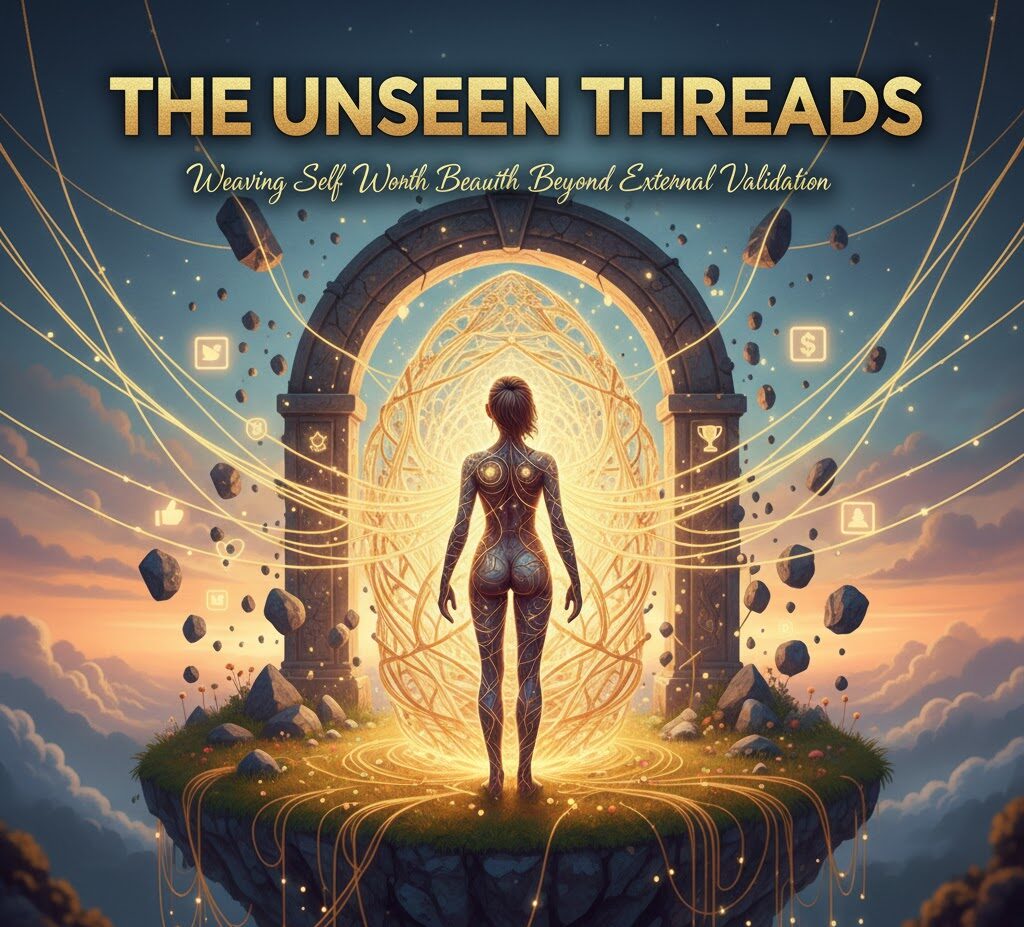
There are moments, aren’t there, when life feels like a relentless current, pulling you along without much say in the direction? You look around, perhaps at friends who seem to be effortlessly navigating their paths, or at the curated perfection often splashed across our screens, and you feel a quiet dissonance. It’s not envy, exactly, but a deep, unsettling question: “Am I moving forward, or just moving?” This feeling of being adrift, even when busy, is a familiar landscape for many of us embarking on the inner journey of self-growth. It’s a signpost, not a dead end, indicating it’s time to look inward, not outward, for direction.
 For years, I’ve seen it in myself and in countless others I’ve had the privilege to walk alongside. We chase the external markers of success – the promotions, the milestones, the perfect relationships – hoping they’ll somehow fill an internal void or provide the validation we crave. But often, these achievements, while pleasant, don’t fundamentally shift that inner sense of unease or provide the deep, abiding peace we yearn for. This is where growth usually feels invisible, happening not in leaps and bounds, but in the quiet, often imperceptible shifts within our own consciousness.
The Illusion of Rapid Transformation
The world, especially the digital one we inhabit in 2025 and beyond, bombards us with narratives of overnight success and instant transformation. We see gurus promising quick fixes, influencers showcasing seemingly perfect lives, and articles proclaiming revolutionary methods for achieving enlightenment in 30 days. This external pressure creates a subtle, yet powerful, myth: that self-growth should be fast, linear, and outwardly visible. When our own inner work doesn’t yield such dramatic results, we often feel like we’re failing.
But let me tell you, from experience that’s been weathered by time and a fair share of stumbles, true growth is rarely a sprint; it’s a marathon, a slow unfolding, like a tightly furled bud gradually opening to the sun. It’s often quieter, more profound, and deeply personal. The uncomfortable truth is that growth is inherently slow because it requires rewiring deep-seated patterns of thought, emotion, and behavior. It demands patience, resilience, and a willingness to sit with discomfort – qualities that are not often celebrated in our fast-paced culture.
Think about it: When you’re trying to learn a new language, you don’t become fluent overnight. There are long periods of rote memorization, confusing grammar rules, and awkward conversations. Yet, you persist because you have a goal. Self-growth is similar, but the goal is often less defined, and the progress is measured in internal shifts rather than external achievements. The progress is in your increased capacity to handle a difficult conversation without lashing out, your ability to observe a negative thought without identifying with it, or your quiet confidence in making a decision aligned with your values, even if it’s unpopular.
This is where many people make a common mistake: they expect their inner world to change as rapidly as their external circumstances can be altered. They might try a new meditation technique for a week and expect profound peace, or read a few self-help books and expect their core beliefs to shift. When the instant results don’t materialize, they get discouraged and abandon the process, often concluding that they are simply “not good at” personal development. This is a fundamental misunderstanding of how deep, lasting change actually occurs.
Deconstructing the Slow Burn: What Growth Really Looks Like
So, what does this “slow burn” of growth actually entail? It’s not about adding more to your plate or chasing the next big trend in self-improvement. It’s about subtraction, about shedding layers, and about cultivating a deeper connection with your authentic self. It’s about becoming more aware of the inner landscape – your thoughts, your emotions, your habitual reactions – and learning to navigate it with more wisdom and less judgment.
One of the most crucial aspects of this journey is developing self-awareness. This isn’t just knowing what you like to eat or what your favorite color is. It’s about understanding the ‘why’ behind your actions, the unconscious beliefs that shape your perceptions, and the emotional triggers that send you spiraling. For instance, you might notice a pattern of avoiding conflict. Self-awareness isn’t just acknowledging this avoidance; it’s exploring the root cause. Is it a fear of rejection? A learned behavior from childhood? Understanding these underlying mechanisms is the first step to gently, intentionally, choosing a different response.
This is where growth usually feels invisible because it’s happening internally. You might find yourself responding to a challenging situation with more calm than you would have a few months ago. You might notice yourself less easily swayed by external validation. These are significant shifts, but they don’t always come with fanfare. They are the quiet triumphs of an evolving inner landscape.
Another key element is emotional maturity. This means learning to acknowledge, process, and regulate your emotions rather than suppressing them, acting them out impulsively, or becoming overwhelmed by them. It’s the ability to feel anger without exploding, sadness without collapsing, and fear without being paralyzed. It’s about understanding that emotions are signals, not dictates. In the current social climate, where emotional reactivity can be amplified and misunderstood, cultivating this inner steadiness is more vital than ever. It allows us to engage with the world from a place of groundedness, not reactivity.
Discipline, often misunderstood as rigid self-control, is also a cornerstone. But it’s not about forcing yourself to do things you hate. It’s about building habits that align with your values and support your long-term well-being. It’s about showing up for yourself, even when motivation wanes. This is where many people avoid this uncomfortable step: they rely solely on motivation, which is a fickle companion. True progress comes from building consistent, small actions, regardless of how you feel on any given day. This is akin to showing up for your practice, even on days when you don’t feel inspired. The consistency builds momentum and strengthens your inner resolve.
Common Pitfalls and Myths on the Path
As you delve deeper into self-growth, you’ll inevitably encounter common pitfalls and, importantly, popular myths that can derail your progress. One of the biggest is the myth of perfection. We often believe that once we “arrive” at a state of self-mastery, we’ll be free from mistakes, negative thoughts, or emotional turbulence. This is a recipe for disappointment. The reality is that growth isn’t about eliminating imperfections; it’s about embracing them as part of the human experience and learning from them.
Another pervasive myth is that motivation is the primary driver of change. While motivation can provide an initial spark, it’s far too unreliable to sustain long-term growth. The real engine is discipline, or rather, commitment. It’s the quiet resolve to keep going, to practice the chosen habits, to show up for your inner work, day after day. This commitment is what allows you to navigate the inevitable plateaus and dips in your progress. As the saying goes, “Show up for your life, even when you don’t feel like it.” This is where growth begins when inspiration fades.
Comparison is another thief of joy and progress. In an age of curated online lives, it’s easy to look at others and feel inadequate. Remember, you are on your unique path. Comparing your behind-the-scenes struggles to someone else’s highlight reel is a guaranteed way to feel stuck. Focus on your own journey, celebrate your small wins, and trust the process. This is particularly relevant in today’s interconnected world, where the constant influx of others’ perceived successes can feel overwhelming. It’s vital to cultivate an inner filter and remember that everyone is navigating their own complex reality.
Over-reliance on external validation is also a major stumbling block. When our sense of worth is tied to the approval of others, our growth becomes contingent and fragile. True self-growth fosters an inner locus of control, where our sense of self-worth comes from within, from our integrity, our efforts, and our alignment with our values. This is a difficult shift, especially when societal conditioning often pushes us towards seeking external approval. Learning to trust your own judgment and value your own inner compass is a profound act of self-evolution.
Finally, there’s the pitfall of trying to “fix” yourself. Growth isn’t about eradicating perceived flaws; it’s about understanding, integrating, and evolving. It’s about moving from a place of self-criticism to self-compassion. When you approach yourself with kindness and curiosity, rather than judgment, transformation becomes a more gentle and sustainable process. This acceptance is the fertile ground upon which lasting change can blossom. Trying to force change often leads to resistance; embracing where you are opens the door to where you want to be.
The Unfolding Impact: Peace, Confidence, and Clarity
The benefits of engaging in this slow, steady process of self-growth are profound and far-reaching. As you cultivate greater self-awareness, emotional regulation, and consistent action, you begin to experience a deeper sense of inner peace. The constant mental chatter, the anxieties about the future, the regrets about the past – they don’t disappear entirely, but their grip loosens. You develop the capacity to observe them without being consumed, allowing for a more serene engagement with life.
This inner peace naturally breeds genuine confidence. It’s not the loud, boastful kind, but a quiet, unshakeable self-assurance that comes from knowing you can navigate life’s challenges with resilience and grace. You become more comfortable in your own skin, less swayed by the opinions of others, and more at ease with your own unique journey. This is the confidence that allows you to take risks, pursue your passions, and live more authentically.
Clarity of purpose and direction also emerges. When you understand yourself better – your values, your strengths, your desires – decision-making becomes more straightforward. You can more easily discern what is truly aligned with your path and what is a distraction. This clarity reduces the mental energy spent on indecision and allows you to channel your focus towards what truly matters. It’s like tuning a radio; you’re able to find the clear station amidst the static, allowing you to hear your inner guidance more distinctly. This clarity is invaluable in navigating the complexities of modern life, where choices can feel overwhelming. The ability to make decisions that align with your core self is a hallmark of maturity.
Moreover, this internal work makes you more adaptable. In a world that is constantly changing, the ability to pivot, learn, and evolve is paramount. The resilience built through self-growth equips you to handle unexpected shifts with greater ease, seeing them not as threats, but as opportunities for further learning and development. This adaptability is the key to sustained well-being and success in the unpredictable years ahead.
Looking Ahead: The Evolving Self in 2026 and Beyond
As we navigate 2026 and look towards the future, the landscape of personal evolution continues to shift. The emphasis will likely move even further from external achievements to internal states of being. The ability to manage information overload, to discern truth from noise, and to maintain emotional equilibrium in a hyper-connected, often chaotic world will be critical skills.
The individuals who will thrive are those who have cultivated a strong inner compass, a deep sense of self-awareness, and the capacity for genuine connection. They are the ones who understand that their growth is not a destination, but an ongoing process of becoming. They embrace lifelong learning, not just of external skills, but of their own inner workings. This continuous evolution fosters a profound sense of purpose and resilience.
The future belongs to those who can find stillness amidst the noise, who can listen to their inner wisdom, and who are committed to the ongoing, beautiful work of inner transformation. It’s about cultivating a quiet strength, a deep knowing, and an unwavering commitment to becoming the most authentic, evolved version of yourself. This path is not always easy, but it is undeniably the most rewarding one we can walk.
Frequently Asked Questions About Self-Growth
Q1: Why does self-growth feel so slow and difficult?
A: True self-growth involves rewiring deep-seated patterns of thought, emotion, and behavior, which takes time and consistent effort. It’s like changing the course of a mighty river; it requires patience and persistent redirection, not just a sudden dam. Your brain and your habits are designed for efficiency and familiarity, so venturing into new territory naturally feels challenging and slow. Embrace the process, celebrate small shifts, and trust that consistent effort yields profound results over time. Remember, Rome wasn’t built in a day, and neither is a deeply evolved self.
Q2: How can I stay motivated on my self-growth journey?
A: Motivation is often fleeting. Relying solely on it will lead to inconsistency. Instead, focus on building commitment and discipline through small, consistent habits. Connect with the deeper ‘why’ behind your desire for growth – what truly matters to you? Celebrate small wins and acknowledge your progress, no matter how minor it seems. Sometimes, just showing up for yourself, even when you don’t feel like it, is the most powerful form of motivation. Think of it less as a chase for a feeling and more as a promise you make to yourself.
Q3: Is it possible to change my personality?
A: While your core temperament might be relatively stable, your personality – the way you think, feel, and behave – is absolutely malleable. Self-growth is precisely about consciously shaping and refining your personality to align with your values and aspirations. It’s not about becoming someone else, but about becoming a more authentic, mature, and functional version of yourself. You can absolutely cultivate traits like patience, resilience, and empathy, which will fundamentally alter how you show up in the world.
Q4: How do I know if I’m actually growing or just busy?
A: This is a critical distinction. True growth often manifests as internal shifts: increased self-awareness, better emotional regulation, greater peace, improved decision-making, and more meaningful relationships. If you’re busy but feel the same internal turmoil, confusion, or reactivity, you might just be busy. Look for changes in how you respond to challenges, how you manage stress, and your overall sense of inner well-being, rather than just the number of tasks you’ve completed. Are you more patient? More understanding? Less reactive? These are indicators of real growth.
Q5: What are the biggest mistakes people make in self-growth?
A: Common mistakes include expecting overnight results, relying only on motivation, falling into the comparison trap, seeking external validation exclusively, and trying to “fix” oneself rather than evolve. Another significant error is not being patient enough with the process, leading to giving up prematurely. It’s also easy to get caught up in the ‘doing’ of self-help (reading books, attending workshops) without integrating the learnings into daily life. Real change happens in the quiet, consistent application of insights.
Q6: How does self-growth impact my relationships?
A: As you grow internally, your relationships tend to transform positively. Increased self-awareness helps you understand your role in relational dynamics, leading to better communication and conflict resolution. Emotional maturity allows for more authentic connection and empathy. As you become more grounded and confident, you attract healthier relationships and are better equipped to set boundaries and nurture meaningful connections. It shifts relationships from being sources of external validation to being partnerships built on mutual respect and understanding.
Q7: How can I apply self-growth principles in a fast-paced, modern environment like 2026?
A: In today’s world, focus on cultivating mindfulness and presence amidst the chaos. Small, consistent practices like short meditations, mindful breathing breaks, or conscious pauses throughout the day can make a huge difference. Prioritize deep work over constant multitasking. Set clear boundaries around technology and social media to protect your mental space. Focus on building resilience by reframing challenges as learning opportunities. Your inner development needs to be as adaptable as the world around you, focusing on cultivating mental clarity and emotional stability as your core strengths.