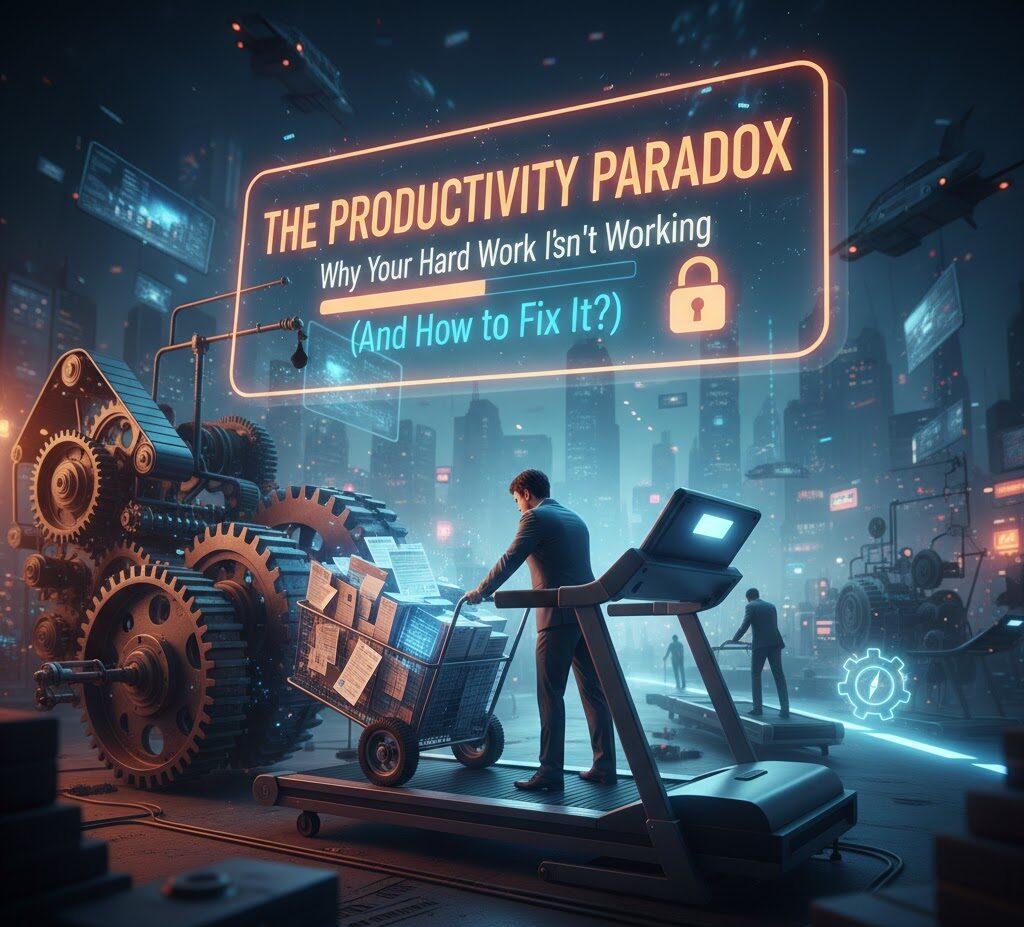
Ever feel like you’re running a marathon… but keep ending up in the same place? Like you’re *constantly* busy, juggling a million things, yet somehow the *real* work, the stuff that moves the needle, just… doesn’t seem to get done?
Welcome to the Productivity Paradox. It’s a sneaky little trap, and most of us fall into it at some point. It’s the gap between *activity* and *achievement*. It’s the frustrating feeling of being swamped, yet simultaneously stalled.
 I get it. I’ve been there. For years, I chased the “hustle” narrative, measuring my value by how many hours I logged, how many emails I answered, and how many tabs I had open. I was a productivity ninja… on the surface. But behind the scenes? Burnout. Zero results. And a growing sense that I was missing the point entirely.
This is where productivity silently collapses, and where true progress begins. Let’s dig into why this happens and, more importantly, how to break free.
The Illusion of Action: Why Busyness Isn’t Productivity
The first crack in the productivity facade often appears with the misconception that “doing more” equates to “achieving more.” We’ve been conditioned to believe that constant activity is the key. But here’s the cold, hard truth: it’s not about how *much* you do, but *what* you do.
Think about it. How many times have you:
- Checked emails first thing in the morning (and got sucked into a vortex)?
- Jumped from task to task without a clear plan?
- Said yes to everything, even if it wasn’t aligned with your goals?
These actions create the *illusion* of progress. You *feel* busy, which can trick you into thinking you’re being productive. But you’re likely just spinning your wheels.
The Distraction Density of the Modern World
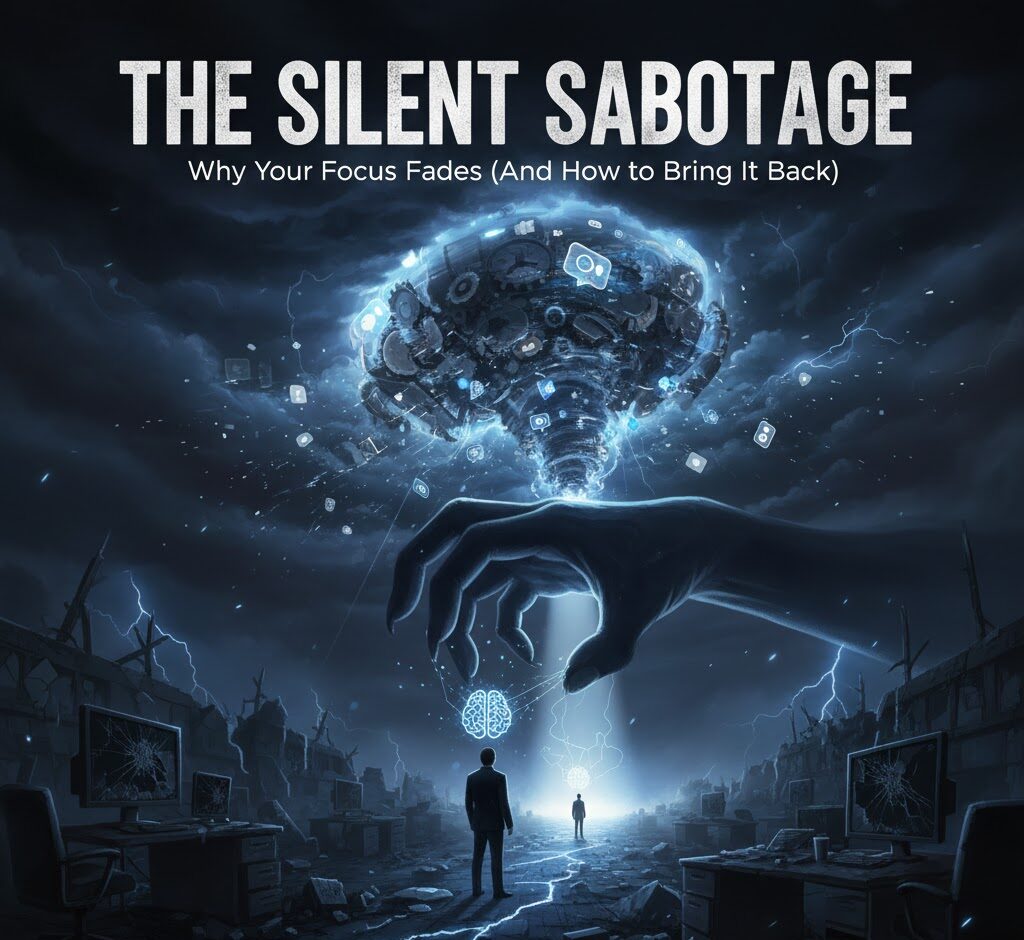
Let’s be real: we’re living in peak distraction mode. Smartphones, social media, notifications… they’re all designed to grab your attention and keep it. Every ping, buzz, and notification is a tiny productivity killer. They hijack your focus, disrupt your flow, and leave you feeling scattered and mentally exhausted.
It’s not your fault. Our brains aren’t wired to handle this constant barrage of information. We’re wired for depth, for focus, for extended periods of concentration. These habits are crucial for complex work.
The Multitasking Myth
Here’s a myth that needs busting: multitasking. It’s sold as a superpower, but it’s a productivity disaster. Our brains aren’t designed to effectively handle multiple tasks simultaneously. What actually happens is “task-switching,” which costs you time and mental energy. You’re not truly doing two things at once; you’re rapidly switching between them, and the result is almost always lower quality work and a longer completion time.
The Core Problem: A Lack of Systems
The biggest productivity killer isn’t a lack of time; it’s a lack of systems. Without clear structures, processes, and habits, your efforts will always be scattered and inconsistent.
Think of it like building a house. You wouldn’t just start randomly laying bricks, right? You’d have a blueprint, a plan, a system. Yet, when it comes to productivity, we often fly by the seat of our pants. We hope, we wish, we react to whatever comes our way. That’s a recipe for overwhelm and frustration.
But when you apply a system, the building process becomes simpler and you achieve your goals more efficiently.
The Power of Planning (and Why Most Plans Fail)
Most productivity gurus tell you to plan. The problem? Most planning advice is…well, garbage. Long to-do lists that you never finish are a source of stress, not direction.
Here’s a better approach. A good plan gives you:
- Clarity: Knowing *exactly* what you need to do.
- Direction: Focusing your energy on the important stuff.
- Accountability: Tracking your progress and staying on track.
So, how to plan effectively?
The 80/20 Rule Applied to Planning
I’m a big fan of the 80/20 Rule (also known as the Pareto Principle): 80% of your results come from 20% of your efforts. Here’s how to use it in your planning:
- Identify the 20%: What are the few key tasks that will deliver the most significant results? Focus on those.
- Time Blocking: Schedule specific time blocks in your calendar for those high-impact tasks. Treat them like appointments.
- Batching: Group similar tasks together (e.g., answering emails, making phone calls, content creation). This reduces context switching and saves time.
The key here is prioritization. Don’t fill your plan with a mountain of minor tasks. Focus on the core activities that drive your goals. This makes the important work a priority.
Building a Habit System for Execution
The best plans are useless if you can’t *execute* them. This is where habit systems come in. These are the daily routines and practices that support your productivity goals. The best habits are simple, consistent, and easy to stick with.
Here’s how to build a habit system:
- Start Small: Don’t try to change everything at once. Pick one or two new habits.
- Make it Obvious: Make the habit easy to see and remember (e.g., place your workout clothes by your bed).
- Make it Attractive: Link your new habit to something you already enjoy (e.g., listen to a podcast while exercising).
- Make it Easy: Reduce friction. Make the habit as simple as possible.
- Make it Satisfying: Reward yourself when you complete the habit.
Consistency is key. The more you repeat these habits, the more automatic they become. This is the difference between a fleeting burst of productivity and sustainable results.
Common Productivity Mistakes (And How to Avoid Them)
We’ve all been there. It’s easy to fall into counterproductive habits. But recognizing these mistakes is the first step toward correcting them.
Mistake #1: The Shiny Object Syndrome
We get easily distracted by new apps, techniques, or strategies. We bounce from one thing to the next, always chasing the “next best thing.” This is exhausting, and it prevents you from mastering anything.
The Fix: Resist the urge to constantly experiment. Choose a few proven methods, and stick with them. Focus on refining your systems, not constantly switching them.
Mistake #2: Perfectionism Paralysis
The enemy of done is perfect. We can become so fixated on creating the “perfect” plan, the “perfect” schedule, or the “perfect” outcome that we never start. It prevents you from taking action.
The Fix: Embrace “good enough.” Focus on progress, not perfection. Get something done, and then improve it. Ship it, then iterate.
Mistake #3: Overworking (Without Results)
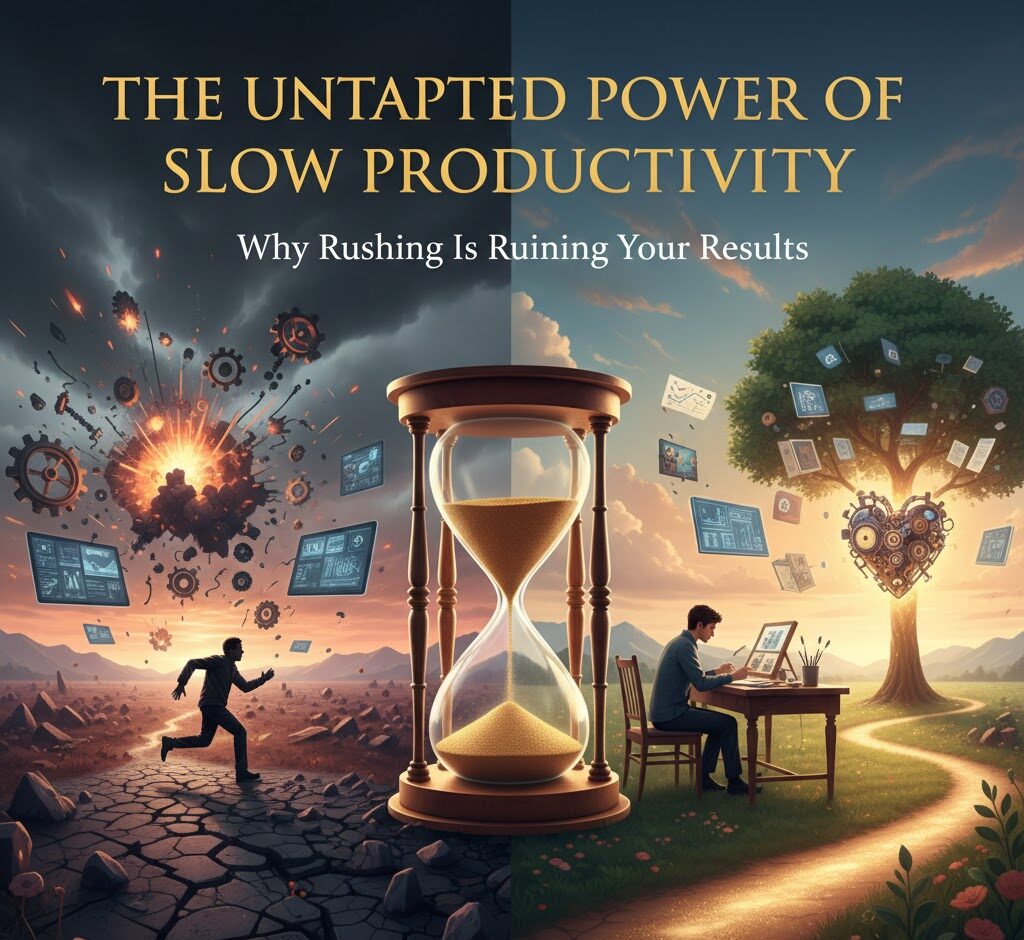
Long hours don’t equal high output. Overworking leads to burnout, mental fatigue, and diminished returns. It’s a sign that your systems aren’t working.
The Fix: Prioritize rest and recovery. Schedule breaks, take time off, and learn to disconnect. The most productive people often work *less*, not more. You need to recharge.
Mistake #4: The “Motivation First” Fallacy
Waiting for motivation is a recipe for procrastination. Motivation is fleeting. It comes and goes. Relying on it is unreliable.
The Fix: Focus on habits. Actions come *before* motivation. Once you start working, motivation tends to follow. Systems, not inspiration, are what deliver results.
The Long-Term Impact: Productivity, Income, and Mental Health
Sustainable productivity is about more than just getting things done. It’s about achieving your goals *without* sacrificing your well-being. It is a long-term strategy, not a sprint.
When you build effective productivity systems, you’ll experience:
- Increased Output: You’ll get more done in less time.
- Reduced Stress: You’ll be less overwhelmed and more in control.
- Improved Focus: You’ll eliminate distractions and work more deeply.
- Greater Income: The more effective you become, the more value you create.
- Enhanced Mental Health: You’ll reduce burnout and create a sense of accomplishment.
- More Free Time: Ironically, becoming more productive *frees up* more time for the things you enjoy.
The Future of Productivity: What to Expect
The digital landscape and work environment are constantly evolving. Here are a few trends to watch:
- AI-Powered Assistants: AI tools will become more integrated into our workflow. They can help with everything from scheduling to note-taking.
- The Rise of Remote and Hybrid Work: As remote work continues, effective time management and self-discipline become even more critical.
- Focus on Mental Wellness: The importance of mental health and avoiding burnout will become even more mainstream.
- The Need for Adaptability: The ability to learn, unlearn, and adapt to change will be a key skill.
The key takeaway? Build *robust*, adaptable systems. Embrace the idea of constant improvement.
For more insights on building sustainable productivity habits, check out Jamgro.
Frequently Asked Questions
- I’m always busy, but never feel like I’m making progress. What should I do?The problem isn’t your schedule; it’s likely your *system*. Start with a ruthless evaluation of your time. Where does it *really* go? Then, prioritize the 20% of tasks that produce 80% of your results. Use a planner to schedule those tasks first.
- How do I stop procrastinating?Procrastination is often a symptom of overwhelm. Break down big tasks into smaller, more manageable steps. Set deadlines (even if they’re self-imposed). And remember, start before you *feel* ready. Taking action is the best cure for procrastination.
- How do I avoid burnout?Prioritize rest, recovery, and down-time. Schedule breaks throughout your day, and take regular time off. Learn to say “no” to commitments that drain your energy. Consider The Energy Audit: Unlocking Your Peak Performance by Managing Your Daily Battery .
- What’s the best time management technique?There is no *single* best technique. The best approach is the one that works for *you*. Experiment with different methods (time blocking, the Pomodoro Technique, etc.), and find what fits your workflow and personality. But remember: Focus on execution, not perfection.
- I get distracted by my phone all the time. How do I fix this?Turn off notifications. Put your phone in “Do Not Disturb” mode. Use website blockers. Schedule specific times for checking your phone, and stick to those times. Make your phone less accessible.
- How do I stay motivated?Motivation comes *after* action. Build strong habits, and focus on consistency. Break down your goals into smaller steps, and celebrate your wins. Reward yourself. Be kind to yourself. Don’t expect to be “motivated” all the time. Instead, focus on building the habits that produce results.
- Is it really possible to get more done in less time?Absolutely. It’s not about working harder; it’s about working *smarter*. Once you implement good systems, prioritization, and focus, you will see a rapid improvement in the results you deliver. You might also find yourself with more free time.
Ready to escape the productivity paradox and start working *smarter* instead of *harder*? Building effective productivity systems takes time and effort. But the rewards – increased output, reduced stress, and a better life – are well worth it.