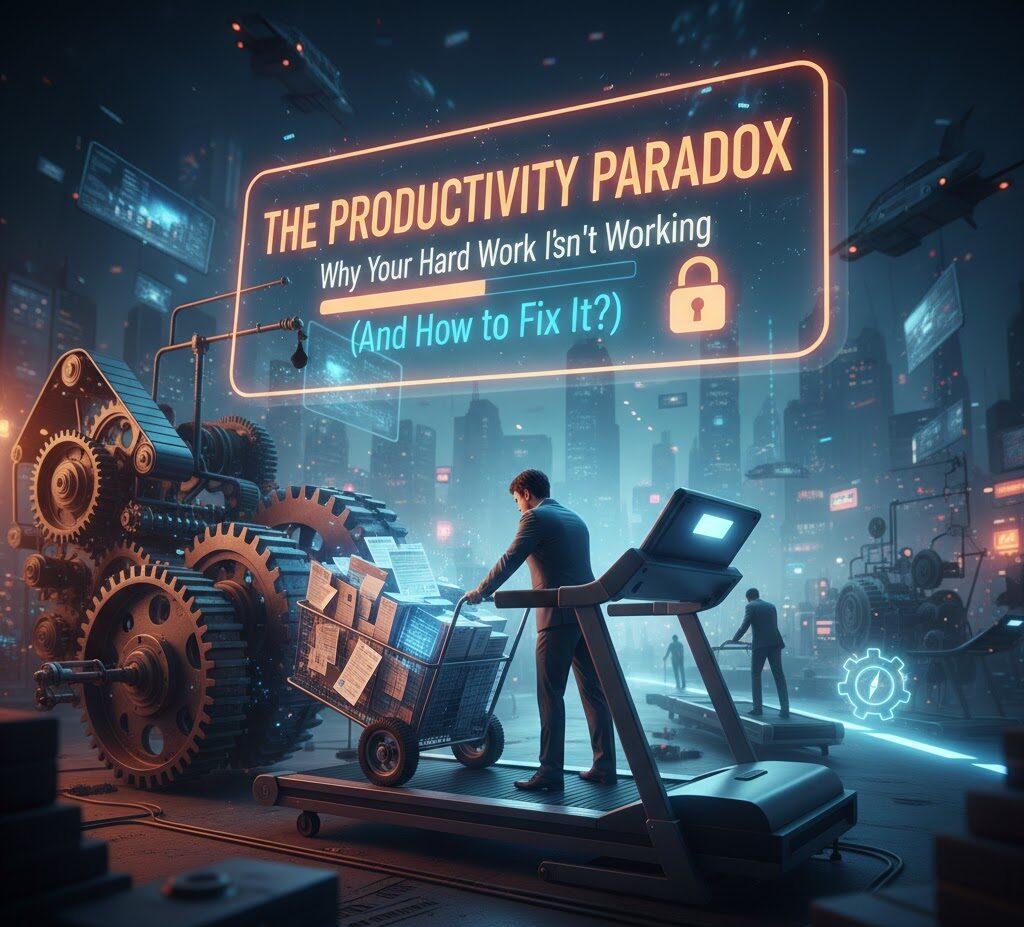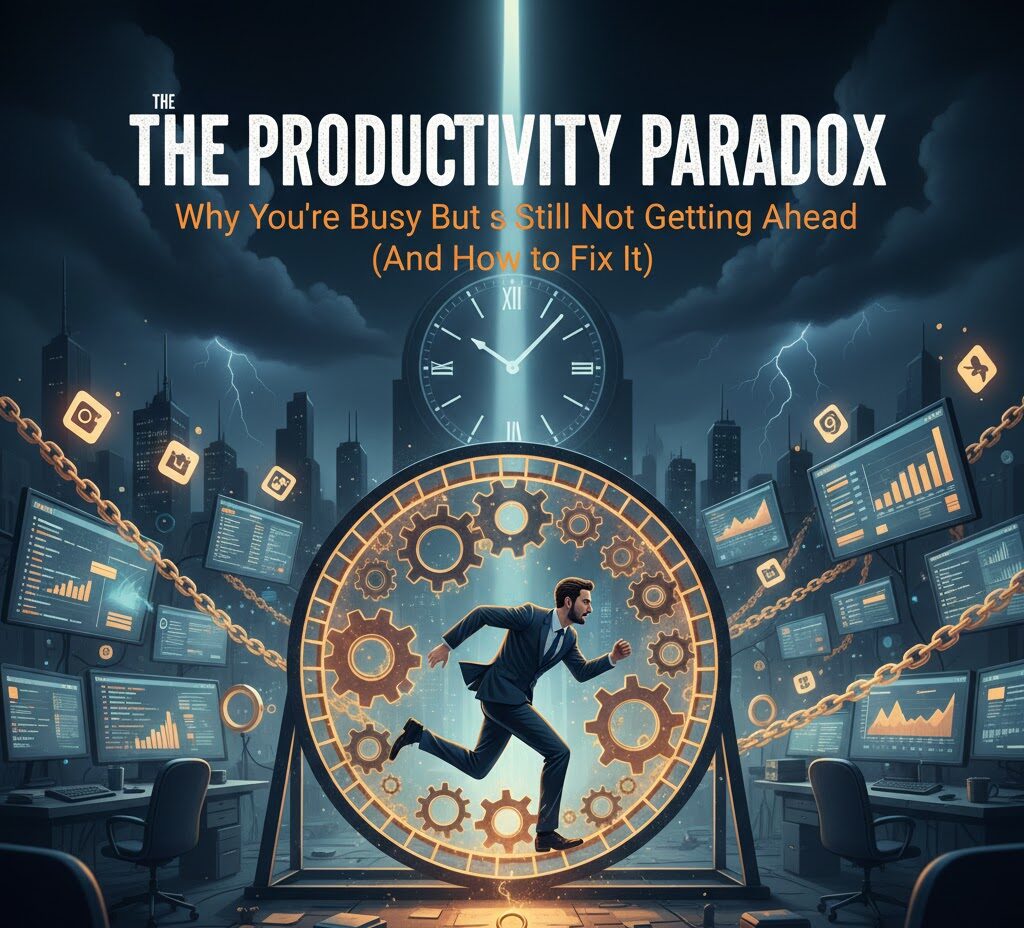
Ever feel like you’re running a marathon in slow motion? You’re “busy” from the moment you wake up, bouncing between emails, meetings, and a to-do list that seems to multiply overnight. But at the end of the day, you look back and wonder, “What did I actually achieve?”
 This isn’t a rant about “hustle culture.” It’s about a silent productivity killer, a thief that steals your time, energy, and results without you even realizing it. I’ve seen it firsthand in my 20+ years of coaching: smart, driven people stuck in a cycle of motion, mistaking activity for accomplishment. This is where productivity silently collapses, and the real work never gets done.
The Illusion of “Being Busy”
We’re bombarded with the idea that the more hours we put in, the more successful we’ll become. Long hours, constant multitasking, and a jam-packed schedule are badges of honor. But here’s the truth: Busyness is often a smokescreen. It’s easy to look busy. It’s much harder to do the things that actually move the needle.
Think about your own day. How much time do you spend on:
- Reacting to emails and notifications?
- Attending meetings that could have been emails?
- Switching between tasks, losing focus with each shift?
These activities create the illusion of productivity. But they’re often shallow, reactive, and don’t contribute significantly to your goals. You might feel exhausted at the end of the day, but what did you really create?
The Root Cause: Productivity’s Broken Foundation
The problem isn’t a lack of time; it’s a lack of a solid foundation. Most people approach productivity with the wrong mindset.
Myth #1: More Hours = More Output This is a dangerous lie. Your brain isn’t a machine. Extended work hours without proper breaks lead to mental fatigue, burnout, and diminished returns. Remember the 80/20 rule, a smaller amount of focused work has a larger outcome than a vast amount of unfocused work.
Myth #2: Motivation First Waiting for motivation is like waiting for the perfect weather to start a project. Motivation follows action, not the other way around. You have to start moving.
Myth #3: Multitasking is Efficient Your brain can’t truly multitask. What you perceive as multitasking is rapid task-switching, which shreds your focus, increases stress, and lowers the quality of your work. It’s far better to do one thing with focus and complete it before starting on the next.
The Real Problem: The real issue is a lack of clear goals, effective planning, and a system for managing your energy. You need a strategy to filter out the noise and focus on what truly matters.
The Sustainable Productivity System: Work Smarter, Not Harder
Forget the generic productivity tips. Here’s a practical system based on proven strategies:
1. Define Your “Big Rocks”
Imagine you have a jar, some rocks, pebbles, sand, and water. If you put the sand and water in first, you won’t fit the rocks. But if you put the big rocks in first, everything else fits around them. Your “big rocks” are your most important goals and tasks. Identify 2-3 key priorities for your week, month, and year. These are the non-negotiables that will move you closer to your overall objectives. Schedule these tasks first.
2. Time Blocking: Your Secret Weapon
Time blocking involves allocating specific blocks of time for specific tasks. This isn’t just a to-do list; it’s a schedule for your energy and attention. Be realistic, and build in buffer time to accommodate unexpected interruptions. Use your calendar as your primary tool, not just a reminder.
3. The Power of “Deep Work”
Deep work is focused, distraction-free work. It’s when you’re truly immersed in a task, making significant progress. Block out time for deep work, shut off notifications, and let people know you’re unavailable. Embrace the power of concentration. Turn off the phone and close the email.
4. Energy Management: Your Daily Battery
Productivity isn’t just about time; it’s about energy. If you’re running on empty, you can’t produce quality work. Focus on:
- Sleep: Aim for 7-9 hours of quality sleep.
- Nutrition: Eat whole, unprocessed foods.
- Movement: Take breaks to move throughout the day.
- Breaks: Take short breaks to recharge.
5. The Daily Review: Small Wins, Big Impact
At the end of each day (or the beginning of the next), take a few minutes to review your progress. What did you accomplish? What can you improve? This review allows you to learn and adjust your approach. It’s where you discover what’s working and what’s not.
Common Productivity Mistakes and How to Avoid Them
Here are some mistakes that undermine productivity and how to avoid them:
- Poor Planning: Failing to plan is planning to fail. Take the time to plan your week and day.
- Perfectionism: Striving for perfection slows you down. Aim for “good enough” and iterate.
- Saying “Yes” Too Often: Learn to politely decline commitments that don’t align with your goals.
- Ignoring Breaks: Breaks are not a luxury; they’re essential for focus and creativity.
- Multitasking: It’s a productivity killer. Focus on one task at a time.
The Long-Term Impact: Beyond the “To-Do” List
Sustainable productivity is about more than just getting things done. It’s about:
- Reducing stress and overwhelm.
- Improving your mental health.
- Gaining more free time for things that matter.
- Achieving your goals more efficiently.
- Increasing your income and opportunities.
When you master the art of working smarter, you create a life of greater fulfillment and impact.
The Future of Productivity: What’s Next?
The digital world is changing at warp speed. Here’s what’s on the horizon for productivity:
- AI-Powered Task Management: AI tools will become more sophisticated, helping us prioritize tasks and manage our time.
- The Rise of “Focused Workspaces”: Dedicated spaces for deep work, both at home and in the office, will become more common.
- Emphasis on Mental Well-being: Companies will invest more in employee well-being to maximize efficiency and reduce burnout.
- The 4-Day Workweek: More companies will experiment with shorter workweeks, increasing productivity and work-life balance.
The key to thriving in the future is adaptability. Embrace new technologies, learn new skills, and prioritize your well-being. It is important to stay on top of new developments. This will allow for more time, more energy, and a better you.
Frequently Asked Questions
Here are some of the most common questions I get asked about productivity:
Q: How do I stop procrastinating?
A: Start with small tasks. Break large projects into smaller, manageable steps. Set realistic deadlines. Reward yourself for completing tasks, and eliminate distractions.
Q: How can I manage my time more effectively?
A: Time blocking, prioritize your “big rocks,” and use a calendar to schedule your time. Identify your peak performance times and schedule your most important tasks accordingly. And most importantly, track your time to see where it goes.
Q: How do I deal with distractions?
A: Identify your primary distractions. Turn off notifications, use website blockers, and create a dedicated workspace. Inform others when you need to be left alone, and then stick to it!
Q: How can I avoid burnout?
A: Prioritize sleep, nutrition, and exercise. Take regular breaks. Set boundaries between work and personal life. Learn to say “no” to commitments that drain your energy.
Q: Is multitasking ever okay?
A: No. Your brain isn’t designed to multitask effectively. Focus on one task at a time for optimal results.
Q: How do I stay consistent with my new habits?
A: Start small. Focus on one or two habits at a time. Make it easy to stick to those habits. Track your progress, and celebrate your successes.
Q: I feel overwhelmed, where do I start?
A: Start with a brain dump. Write down everything that’s on your mind. Then, prioritize your tasks and focus on the most important ones. Finally, make a simple plan and start taking action.
Q: How can I improve my communication to get more done?
A: Great talking skills won’t get you hired. Focus on the message. The ability to express yourself is a great skill that can make your productivity skyrocket. This can lead to new opportunities that can affect your work life. A more comprehensive explanation can be found here: The Communication Code: Why Great Talking Skills Alone Won’t Get You Hired.
Conclusion
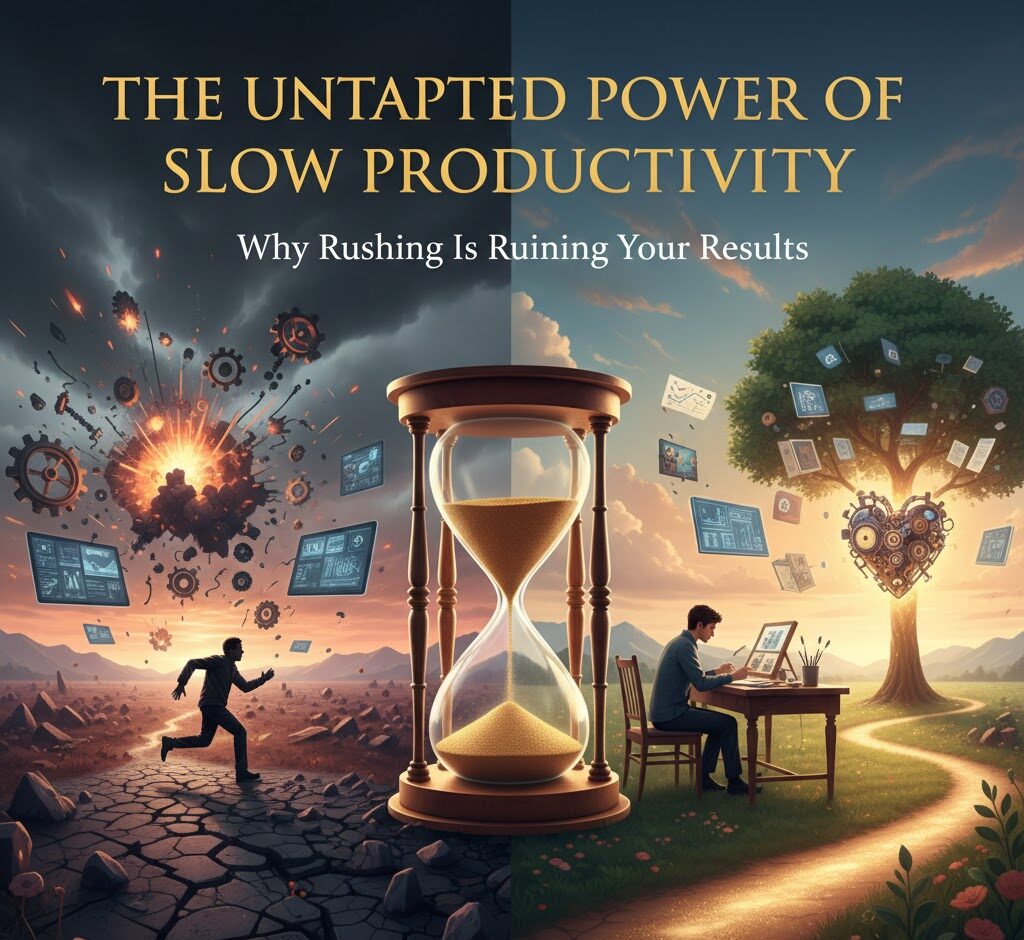
Real productivity isn’t about working harder; it’s about working smarter. It’s about focusing on what matters, managing your energy, and building sustainable habits. Ditch the “busy” mindset and embrace a system that allows you to achieve more with less stress. This is how you reclaim your time, your energy, and your life.
Want to go even deeper? Visit Jamgro for more resources, and tools to help you take control of your productivity and your life.