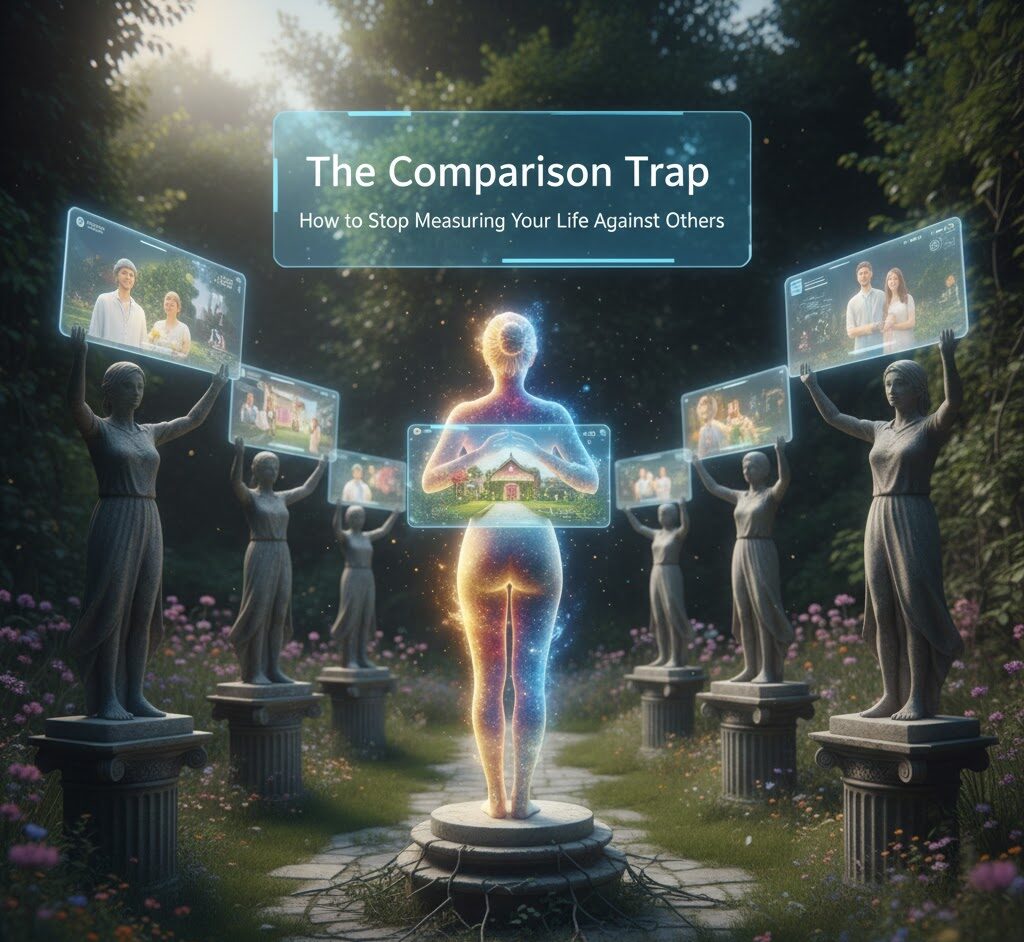
Ever find yourself scrolling through social media, a knot tightening in your stomach as you compare your life to the seemingly perfect highlight reels of others? Or maybe you’re in the office, constantly measuring your achievements against your colleagues, feeling like you never quite measure up? This, my friend, is the comparison trap. It’s a silent thief, stealing your joy, eroding your self-worth, and leaving you feeling inadequate. But it doesn’t have to be this way.
 The Roots of the Comparison Mindset
The habit of comparing ourselves to others doesn’t just appear overnight. It’s a learned behavior, often starting in childhood. We internalize messages from our environment, from parents, peers, and society, about what constitutes success, beauty, and happiness. We learn to measure our worth based on external factors: grades, possessions, social status, and now, the curated realities presented online.
Here’s how it typically works:
- The Seed: A need for validation and a desire to fit in. We all crave acceptance and belonging.
- The Trigger: Exposure to others’ achievements, appearances, or lifestyles – whether in person or online.
- The Thought Pattern: “They have X, and I don’t. They are Y, and I am not. Therefore, I am lacking.”
- The Emotion: Envy, inadequacy, frustration, or self-doubt.
- The Action (or Inaction): We may overwork, overspend, withdraw, or try to emulate others, often unsuccessfully.
This cycle reinforces the comparison habit, making it a deeply ingrained mental pattern. It can be difficult to escape. But awareness is the first step toward freedom.
The High Cost of Constant Comparison
The impact of constantly comparing yourself to others is far-reaching, affecting nearly every aspect of your life. It can lead to:
- Reduced self-esteem: When you constantly measure yourself against others, you’re bound to find flaws. This leads to feelings of inferiority and a diminished sense of self-worth.
- Increased anxiety and depression: The pressure to measure up and the fear of not being good enough can fuel anxiety and contribute to depressive symptoms.
- Damaged relationships: Envy and resentment can poison relationships, making it difficult to celebrate others’ successes and connect authentically.
- Procrastination and self-sabotage: Fear of failure and a sense of inadequacy can lead to putting off important tasks or undermining your own efforts.
- Unhealthy behaviors: Comparison can trigger unhealthy coping mechanisms like overeating, substance abuse, or excessive social media use.
It’s important to recognize that comparing yourself to others is a losing game. There will always be someone “better” or “ahead” in some way. But that doesn’t diminish your inherent value or potential. You can find more insights on this in this related article The Unseen Chains: Breaking Free from the Prison of Self-Doubt.
Myth-Busting: Popular Mindset Myths
Before we dive into how to break free, let’s debunk some common mindset myths that often fuel the comparison trap:
- Myth #1: Confidence is a destination, not a journey. Many people believe you either *have* confidence or you don’t. The truth? Confidence is built, not bestowed. It comes from taking action, facing challenges, and learning from your experiences.
- Myth #2: Motivation is the starting point. We often wait for motivation to strike before taking action. But motivation often *follows* action. Small steps create momentum, leading to bigger accomplishments.
- Myth #3: Willpower is the ultimate key to success. Willpower is finite. Relying solely on it leads to burnout. Sustainable change requires building healthy habits, setting realistic goals, and developing self-compassion.
Practical Strategies to Break Free
Shifting from comparison to self-acceptance and self-worth is a journey, not a quick fix. However, there are practical steps you can take every day to break free from the comparison trap:
- Become Aware of Your Triggers: What situations, people, or platforms tend to trigger comparison for you? Is it social media? Certain friends? Specific work environments? Once you identify your triggers, you can consciously limit your exposure to them or approach them with more awareness.
- Challenge Your Thoughts: When you catch yourself comparing, question the validity of your thoughts. Are they based on facts or assumptions? Are you viewing the situation objectively? Try to replace negative thoughts with more balanced and realistic ones.
- Practice Gratitude: Focus on what you *do* have, not what you lack. Keep a gratitude journal and write down things you appreciate about your life, your skills, and your relationships. This shifts your focus away from comparison and toward abundance.
- Cultivate Self-Compassion: Treat yourself with the same kindness and understanding you would offer a good friend. When you make mistakes or face challenges, be gentle with yourself. Remind yourself that everyone struggles.
- Define Your Own Success: What truly matters to you? What are your values, goals, and passions? Focus your energy on pursuing what’s meaningful to *you*, rather than measuring yourself against external standards.
- Limit Social Media Consumption: Social media is a major trigger for comparison. Be mindful of how much time you spend on these platforms and the content you consume. Consider unfollowing accounts that make you feel inadequate.
- Focus on Your Strengths: What are you good at? What are your unique talents and abilities? Invest time and energy in developing your strengths and celebrating your accomplishments, no matter how small.
- Seek Inspiration, Not Comparison: Admire the achievements of others, but use them as inspiration, not as a measure of your worth. Ask yourself what you can learn from their journey and how you can apply those lessons to your own life.
- Take Action: Comparison often leads to inaction. Set small, achievable goals and take consistent steps toward them. This builds confidence and provides a sense of accomplishment.
Modern Relevance: The Comparison Epidemic in the 2026 World
In 2026, the comparison trap is more pervasive than ever. The constant barrage of curated content, the pressure to “hustle” and achieve, and the blurring of work and personal life create a perfect storm for comparison. Emotional intelligence and mental resilience are more crucial than ever before. We must cultivate these skills to navigate the challenges of the modern world.
Consider these trends:
- The rise of “influencer culture”: The constant exposure to idealized lifestyles creates unrealistic expectations and fuels feelings of inadequacy.
- The pressure to “optimize” every aspect of life: From productivity hacks to self-improvement programs, the relentless pursuit of perfection can leave people feeling like they’re never enough.
- The increasing importance of online validation: Likes, comments, and followers become a measure of self-worth, leading to anxiety and a fear of missing out (FOMO).
To thrive in 2026, we need to:
- Prioritize mental health: Make self-care, mindfulness, and emotional regulation a non-negotiable part of your life.
- Develop a strong sense of self-awareness: Understand your values, your strengths, and your triggers.
- Foster authentic connections: Build meaningful relationships with people who support and uplift you.
- Embrace imperfection: Recognize that everyone struggles and that making mistakes is a natural part of life.
It’s time to build a solid foundation within. Learn more about the Jamgro to discover additional resources.
Frequently Asked Questions
- How can I stop comparing myself to others?Start by becoming aware of your triggers. Challenge your negative thoughts, practice gratitude, cultivate self-compassion, and focus on your own values and goals. Limit social media use and seek inspiration, not comparison, from others.
- Why do I compare myself to others, even though I know it’s not healthy?Comparison is often a deeply ingrained habit, reinforced by societal pressures and a need for validation. It can be difficult to break free, but with conscious effort and the strategies outlined above, it’s possible.
- What’s the difference between healthy and unhealthy comparison?Healthy comparison can be used as a source of inspiration and motivation. You can learn from others’ successes and use them as a guide. Unhealthy comparison leads to feelings of inadequacy, envy, and a diminished sense of self-worth.
- How can I build my self-esteem?Focus on your strengths, set achievable goals, celebrate your accomplishments, and practice self-compassion. Surround yourself with supportive people and engage in activities that bring you joy.
- Is it possible to completely stop comparing myself to others?It’s a natural human tendency, so completely stopping may not be realistic. The goal is to reduce the frequency and intensity of comparison and to prevent it from negatively impacting your well-being.
- What if I can’t stop comparing myself to others on social media?Consider taking a break from social media or drastically reducing your usage. Unfollow accounts that trigger negative feelings. Focus on using social media for positive interactions and to connect with supportive people.
- How can I help my children avoid the comparison trap?Model healthy self-esteem by celebrating your own strengths and accomplishments. Teach your children about the dangers of social comparison and help them develop a strong sense of self-worth. Encourage them to pursue their passions and celebrate their unique talents.
The journey toward freedom from the comparison trap is not always easy, but it’s undoubtedly worthwhile. By implementing these strategies, you can begin to cultivate a more compassionate and accepting relationship with yourself and experience a deeper sense of joy and fulfillment. Remember, you are enough, just as you are.