Ever feel like you’re stuck in a rut? Doing the same tasks, day in and day out, without any real sense of progress? Maybe you’re putting in the hours, meeting deadlines, and even getting decent reviews, but something feels… off. You’re not alone. What’s often missing is **strategic thinking**, the career skill that separates those who just *do* from those who actually
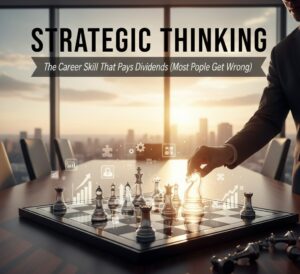 But here’s the problem: Most people misunderstand what strategic thinking *really* is. They think it’s just a fancy term for “thinking big” or “being visionary.” They assume it’s a skill reserved for C-suite executives, something you’ll magically develop after decades in the trenches.
The truth? Strategic thinking is a learnable skill, vital at every level, and something you can start developing *today*. It’s not about crystal balls and grand pronouncements; it’s about seeing the bigger picture, connecting the dots, and making smart choices that lead to real career growth.
Why Strategic Thinking Actually Matters (Beyond the Buzzwords)
Let’s get real. In today’s job market, especially as we head deeper into 2026, employers aren’t just looking for people who can follow instructions. They need individuals who can *think*. Who can analyze situations, anticipate challenges, and make informed decisions that drive the business forward.
Think about it. The world is changing faster than ever. New technologies emerge daily. Market trends shift on a dime. Customer expectations are constantly evolving. In this environment, the ability to think strategically isn’t just a nice-to-have; it’s a *survival skill*.
Here’s where strategic thinking comes into play:
* **Problem-solving:** Strategic thinkers don’t just react to problems; they understand the root causes and develop effective solutions. They are the ones who can fix the real issues, not just put band-aids on the symptoms.
* **Decision-making:** Strategic thinking provides a framework for making informed decisions, even when faced with uncertainty. It helps you weigh options, assess risks, and choose the best path forward.
* **Adaptability:** The ability to pivot when needed, embracing new roles, projects, or industries with ease, is a hallmark of a strategic thinker.
* **Innovation:** Strategic thinkers are always looking for opportunities to improve, to innovate, and to create value. They are the ones who are ready to embrace new technologies and methods.
Hiring managers notice these qualities immediately. Someone who thinks strategically is a game-changer, someone who can help a company grow and succeed.
How Strategic Thinking Works in the Real World (Not Just Theory)
So, how does this play out in the daily grind? What does strategic thinking actually *look* like at work?
Let’s break it down with some concrete examples:
* **Scenario 1: You’re in a project meeting.** Instead of just focusing on *your* tasks, you consider the project’s overall goals, potential roadblocks, and how your work impacts the final outcome. You proactively offer suggestions to improve efficiency or address potential problems.
* **Scenario 2: You’re asked to take on a new project.** Instead of just saying “yes” or “no,” you take the time to understand the project’s objectives, the resources available, and how it aligns with the company’s strategic goals.
* **Scenario 3: You’re facing a challenge in your role.** Instead of immediately jumping to a solution, you take a step back and analyze the situation. You consider the different factors at play, gather information, and explore multiple options before making a decision.
This is where most candidates fail: they focus solely on the *what* and the *how* of their jobs, without considering the *why*. They’re busy, but not necessarily productive. They’re executing, but not *leading*.
The Biggest Mistakes People Make with Strategic Thinking
Unfortunately, many people misunderstand and misuse strategic thinking. Here are some of the most common pitfalls:
* **Mistake #1: Confusing Strategic Thinking with “Big Ideas.”** Strategic thinking isn’t about having a grand vision; it’s about analyzing a situation, gathering information, and making informed decisions. While it can lead to big ideas, that’s not its primary purpose.
* **Mistake #2: Assuming it’s Only for Leaders.** Strategic thinking is valuable at every level. Even if you’re not in a management role, you can still apply strategic thinking to your work, your projects, and your career.
* **Mistake #3: Waiting for the “Right Time.”** Don’t wait until you’re in a leadership position to start thinking strategically. The time to develop this skill is *now*.
* **Mistake #4: Ignoring the Details.** Strategic thinking requires a blend of both the big picture and the small details. You can’t make smart choices if you don’t understand the nuts and bolts of your work.
* **Mistake #5: Failing to Adapt.** The business landscape is constantly evolving. A good strategic thinker must be willing to change with it.
How to Actually Develop Your Strategic Thinking Skills
So, how do you become a strategic thinker? Here’s a practical, actionable plan:
1. **Ask “Why?” Constantly:** Challenge assumptions. Question the status quo. Don’t just accept things at face value. Ask *why* things are done the way they are.
2. **Seek Out Different Perspectives:** Talk to people in different departments, read industry publications, and attend webinars. The more perspectives you have, the better your understanding will be.
3. **Analyze the “Big Picture”:** Learn about your company’s strategic goals, the industry trends, and the competitive landscape. See how your work fits into the bigger picture.
4. **Practice Decision-Making:** When making choices, even small ones, take the time to weigh your options, consider the potential outcomes, and justify your decisions.
5. **Embrace Learning:** Stay curious. Never stop learning. The more you know, the better equipped you’ll be to think strategically.
6. **Find a Mentor:** Connect with a senior leader or someone you admire and ask them to share their insights.
7. **Take on New Challenges:** Volunteering for new projects and roles is a great way to grow your strategic muscles.
8. **Reflect and Evaluate:** Regularly assess your work and identify areas for improvement. Are you solving the right problems? Are you making smart choices?
These are all actionable steps anyone can take right now.
Long-Term Impact: Why Strategic Thinking Pays Off Big Time
The benefits of developing strategic thinking skills are substantial, both personally and professionally.
* **Increased Job Security:** Strategic thinkers are highly valued and less likely to be impacted by economic downturns or industry changes.
* **Higher Salaries and More Opportunities:** People with strategic thinking skills are often promoted faster and earn more.
* **Greater Influence:** Strategic thinkers are able to build rapport with key figures and stakeholders.
* **Enhanced Problem-Solving Abilities:** Strategic thinkers are better equipped to deal with complex challenges, find solutions, and create meaningful change.
* **Better Adaptability:** As the world evolves, strategic thinkers can adapt, stay relevant, and even anticipate future trends.
In short, strategic thinking is an investment in your future. It’s a skill that will pay dividends throughout your career and beyond.
FAQ: Your Top Questions About Strategic Thinking, Answered
Let’s address some common questions about strategic thinking:
**Q: Is strategic thinking something you’re born with, or can you learn it?**
A: You can absolutely learn it. It’s a skill, not a talent, and can be developed through practice, learning, and a willingness to think critically.
**Q: I’m not a manager. Does strategic thinking matter for my career?**
A: Absolutely. Strategic thinking is vital at every level. It will help you perform your current job better, make you more valuable to your team, and prepare you for future opportunities.
**Q: How do I get started if I’m not used to thinking strategically?**
A: Start small. Ask “why” more often, seek out different perspectives, and practice making informed decisions. Even small changes can make a big difference.
**Q: What’s the difference between strategic thinking and strategic planning?**
A: Strategic thinking is the *process* of analyzing a situation and making informed decisions. Strategic planning is the *output* – the creation of a plan based on that thinking.
**Q: How can I develop strategic thinking if my job is very operational?**
A: Even in operational roles, you can still see the bigger picture. Understand how your work impacts the overall goals, and proactively look for ways to improve efficiency or address potential problems.
**Q: Does having an MBA automatically make someone a strategic thinker?**
A: No. An MBA can provide valuable knowledge and tools, but strategic thinking is about how you *apply* that knowledge. Some people with no formal education are excellent strategic thinkers.
**Q: How long does it take to become a strategic thinker?**
A: There’s no set timeline. It’s a journey, not a destination. Consistent effort, learning, and practice are the keys to developing this skill over time.
**Q: What are some good resources for learning more about strategic thinking?**
A: Read books and articles on business strategy, leadership, and critical thinking. Study your industry. Seek out mentors and thought leaders. Don’t be afraid to learn.
The Bottom Line
Strategic thinking is no longer a luxury; it’s a necessity. It’s a skill that will help you thrive in the face of change and uncertainty. It will help you stand out from the crowd and reach your full potential. Start developing your strategic thinking skills today, and watch your career soar. If you want to take your career to the next level, start thinking *strategically*. And remember, if you want help becoming a problem-solving powerhouse, you should check out this article: The Hidden Skill That Pays: How to Become a Problem-Solving Powerhouse.