I’ve seen it a thousand times. Bright, ambitious people with all the right degrees, impressive experience, and a stack of glowing recommendations. They walk into my office, or onto my Zoom call, and they’re… stuck. They’re not failing, exactly. They’re just not
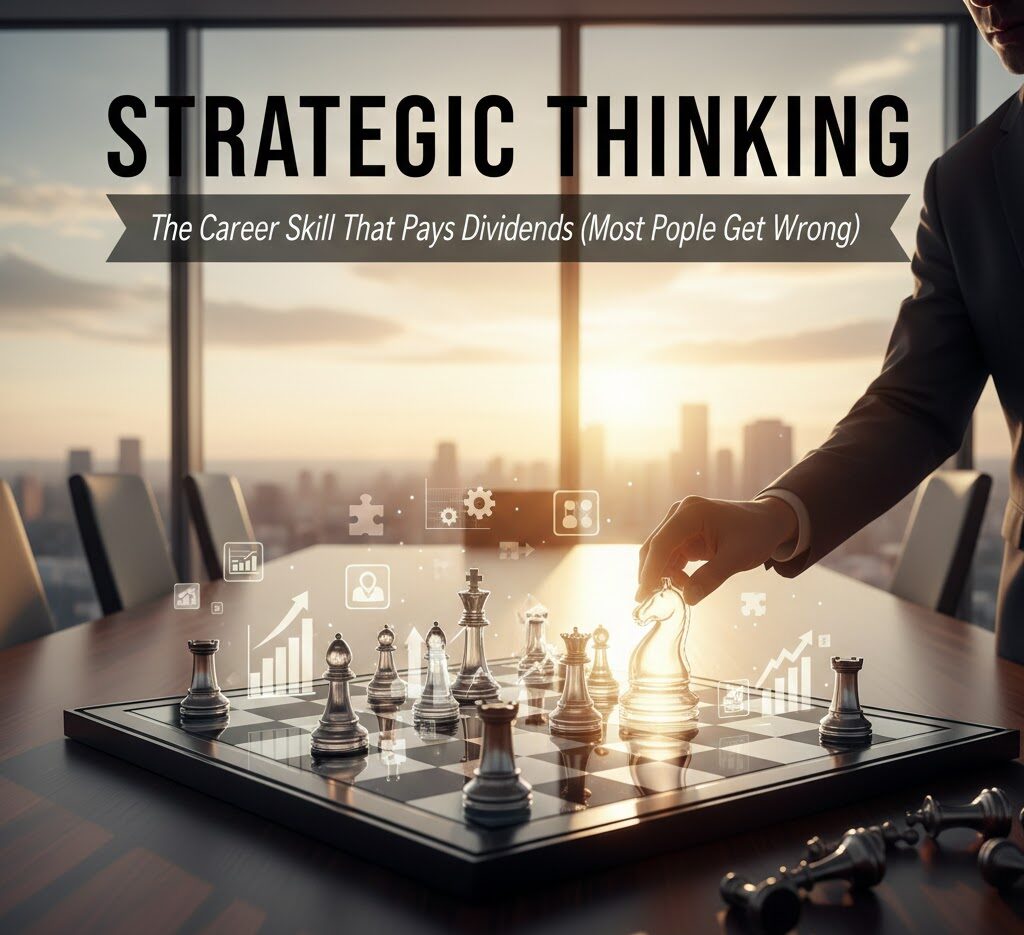
Their careers feel like they’re going in slow motion, and they can’t figure out why. This is because they’re missing something crucial, something that goes far beyond the bullet points on a resume: Strategic Thinking. Strategic thinking. It’s the kind of skill that’s rarely listed as a required qualification, but it’s the invisible engine that powers everything else. It’s what separates the people who simply *do* their jobs from the people who actually *lead* their careers.
Why Strategic Thinking Matters (More Than You Think)
Let’s get real. Most job descriptions focus on the *what* – what you need to do. They list out tasks, responsibilities, and technical skills. But they often miss the *why* and the *how*. Strategic thinking fills in those gaps. It’s about understanding the bigger picture: Where the company is headed, what the market is doing, and how your role fits into it all.
Why should *you* care? Because it’s a silent force that impacts your salary, your growth, and your job security. Here’s why it’s so important:
- It Drives Better Decisions: Strategic thinkers don’t just react; they anticipate. They see potential problems and opportunities before they happen. They make informed decisions aligned with long-term goals.
- It Boosts Your Visibility: When you demonstrate strategic thinking, you’re not just seen as a cog in the machine. You’re viewed as a valuable contributor who understands the business beyond their immediate tasks.
- It Accelerates Growth: Strategic thinkers are more likely to be promoted. They can see what needs to be done *before* anyone else, and they have the vision to move the company – and their careers – forward.
- It Makes You More Resilient: The job market can be unpredictable. When you have a strategic mindset, you’re better equipped to adapt to changes, navigate challenges, and even pivot your career if necessary.
See, it’s not just about ticking boxes. It’s about understanding the game and knowing how to play it to win. That’s what strategic thinking does.
How Strategic Thinking Actually Works at Work
Let’s get practical. How does strategic thinking translate into day-to-day actions? Here’s a peek into what it *actually* looks like in real work situations:
- Problem Solving: Instead of just putting out fires, a strategic thinker analyzes the root causes of the problem. They consider the wider implications and devise solutions that prevent similar issues from arising in the future.
- Prioritization: You’ve got a to-do list a mile long, right? A strategic thinker can look at the list, assess the impact of each task, and prioritize based on what will have the biggest impact on the business.
- Communication: It’s not enough to deliver information. Strategic thinkers tailor their communications to their audience, highlighting the most relevant information and framing it in a way that resonates with their goals.
- Networking: Strategic thinkers build connections. They understand that relationships are assets, and they actively cultivate their network for mutual benefit.
- Innovation: You can’t just follow the same old path. Strategic thinkers are always looking for ways to improve processes, find new opportunities, and stay ahead of the curve.
Look, it’s not about being a genius. It’s about being observant, asking the right questions, and taking a broader view. It’s about connecting the dots.
The Common Traps: Where People Go Wrong with Strategic Thinking
Now, here’s the tough part. Skills look good on resumes, but they often break down at work, right? Strategic thinking is no exception. Here are the most common pitfalls:
- Mistake #1: Confusing Strategic Thinking with “Being Busy.” Just because you’re running around like a headless chicken doesn’t mean you’re thinking strategically. You need to take the time to step back, reflect, and consider the bigger picture.
- Mistake #2: Not Asking “Why?”. Many people focus on *what* they are doing, but they don’t ask *why* they are doing it. Strategic thinkers constantly question, “Why are we doing it this way? Is there a better approach?”
- Mistake #3: Lack of Research. Effective strategy is built on facts. Failing to research the market, the competition, and the industry trends is a recipe for disaster.
- Mistake #4: Not Seeking Input. Thinking you have all the answers is a classic mistake. Smart strategists actively seek input from others – colleagues, mentors, and even people outside their field.
- Mistake #5: Being Afraid to Fail. Innovation and strategy often involve risk. People who are paralyzed by fear of failure will struggle to think strategically.
This is where most candidates fail. They get so caught up in the day-to-day grind that they lose sight of the long game.
Skills vs. Reality: Busting the Myths About Strategic Thinking
Let’s clear up some misunderstandings. Here are some common myths about strategic thinking that need to be debunked:
- Myth: You need a fancy degree to think strategically. Reality: Degrees might give you a base, but strategic thinking comes from experience, observation, and a willingness to learn.
- Myth: Strategic thinking is only for senior management. Reality: Anyone at any level can develop strategic thinking skills. You don’t need a corner office to see the big picture.
- Myth: It’s a “natural” ability – you either have it or you don’t. Reality: Like any skill, strategic thinking can be learned and developed with practice. It’s about developing a mindset.
- Myth: More experience automatically equals better strategy. Reality: Years of experience are only useful if you’re *learning* from those years. The key is to reflect on your decisions, successes, and failures.
See, it’s not magic. It’s about the right mindset and the right approach.
The Long-Term Impact: How Strategic Thinking Shapes Your Career
Here’s the thing: strategic thinking is an investment in your future. Its impact is long-term and far-reaching.
- Increased Earning Potential: The ability to think strategically is highly valued. It translates into higher salaries, more promotions, and greater earning potential over time.
- Faster Career Progression: Strategic thinkers are more likely to be promoted because they demonstrate leadership qualities and a deep understanding of the business.
- Job Security: The ability to adapt, solve problems, and anticipate future challenges makes you a valuable asset, even during economic downturns or industry shifts.
- Greater Job Satisfaction: When you understand the *why* behind your work, your job becomes more meaningful. You’re more engaged, more motivated, and more likely to find satisfaction in your career.
Think about it. This isn’t just about getting a promotion. It’s about building a career that you genuinely enjoy and one where you have a tangible impact.
The 2026 Reality: How Strategic Thinking Will Evolve
The business world is constantly changing. So, how will strategic thinking evolve in the coming years? Here’s a glimpse into the future:
- Data-Driven Decisions: With the explosion of data, strategic thinkers will need to be able to analyze large datasets, identify trends, and make informed decisions based on evidence.
- Adaptability and Flexibility: The pace of change is accelerating. Strategic thinkers need to be agile, adaptable, and willing to experiment with new approaches.
- Emphasis on Collaboration: No one can know everything. The ability to work collaboratively, leverage diverse perspectives, and build strong relationships will be more critical than ever.
- Focus on Systems Thinking: Strategic thinkers will need to understand how different parts of a system interact and how changes in one area can impact others. This includes things like: understanding the rise of AI.
- Ethical Considerations: Strategic decisions will increasingly need to take ethical considerations into account. Transparency, social responsibility, and sustainable practices will become even more important.
The good news? These aren’t separate skills. They build on the foundations of strategic thinking, making it more essential than ever.
How to Start Building Your Strategic Thinking Muscle Today
Okay, so how do you actually *develop* strategic thinking? It’s not an overnight transformation, but these steps will set you on the right path:
- Ask the Right Questions: Don’t just accept things at face value. Ask “why?” “What if?” and “How could we improve this?” all the time.
- Read Widely: Read industry publications, business journals, and books on strategy and leadership. Knowledge is power.
- Seek Feedback: Ask colleagues, mentors, and managers for feedback on your thinking and decision-making process.
- Analyze Your Mistakes: Every mistake is a learning opportunity. Reflect on your failures and consider what you could have done differently.
- Practice, Practice, Practice: The more you practice strategic thinking, the better you’ll become. Take on projects that challenge you to think critically and solve complex problems.
- Network Strategically: Build a network of people from diverse backgrounds and industries. Learn from their experiences and perspectives.
- Take Calculated Risks: Don’t be afraid to take risks, even if you’re not sure about the outcome. Experiment with new ideas and approaches.
This is where most people struggle. They have the knowledge, but they don’t apply it. They need to practice.
FAQs: Your Strategic Thinking Questions Answered
Here are some of the most common questions I get from people who want to level up their strategic thinking skills:
- How can I demonstrate strategic thinking in a job interview? Focus on the *why* behind your actions. Describe a situation where you identified a problem, analyzed the potential solutions, and explained the rationale behind your chosen approach. Give specific examples.
- Is strategic thinking the same as critical thinking? They’re related, but not the same. Critical thinking is about analyzing information and forming judgments. Strategic thinking builds on this, using the insights to develop plans and achieve goals.
- What are some good resources for learning about strategic thinking? There are countless books, articles, and online courses. Start with the basics of business strategy. Then, explore case studies, industry reports, and leadership publications.
- How can I develop strategic thinking if I don’t have a background in business? Don’t let that hold you back. The principles of strategic thinking can be applied in any field. Focus on understanding the bigger picture, seeking diverse perspectives, and practicing your decision-making skills.
- How do I convince my manager that I’m thinking strategically? Show, don’t tell. Don’t just say you’re thinking strategically. Present your ideas, solutions, and recommendations in a clear, concise, and data-driven manner. Demonstrate that you’ve considered the wider implications of your actions.
- Can strategic thinking be taught? Yes, absolutely. While some people may have a natural aptitude, strategic thinking is a skill that can be developed through practice, learning, and seeking feedback. It’s a journey, not a destination.
- What’s the biggest mistake people make when trying to think strategically? Trying to do too much, too fast. Strategic thinking is about making careful, informed decisions, not about rushing into action without a plan. Start small, build your skills, and gradually increase your involvement in strategic initiatives.
The journey of a thousand miles begins with a single step. Start building your strategic thinking skills today. The rewards are significant, both in your career and in your personal life. Consider The Unseen Threads: Why Growth Feels Slow and How to Weave a Life of Real Change to learn about how slow growth can be overcome.
This skill can take you further than you thought possible. It’s time to stop coasting and start *leading* your career.