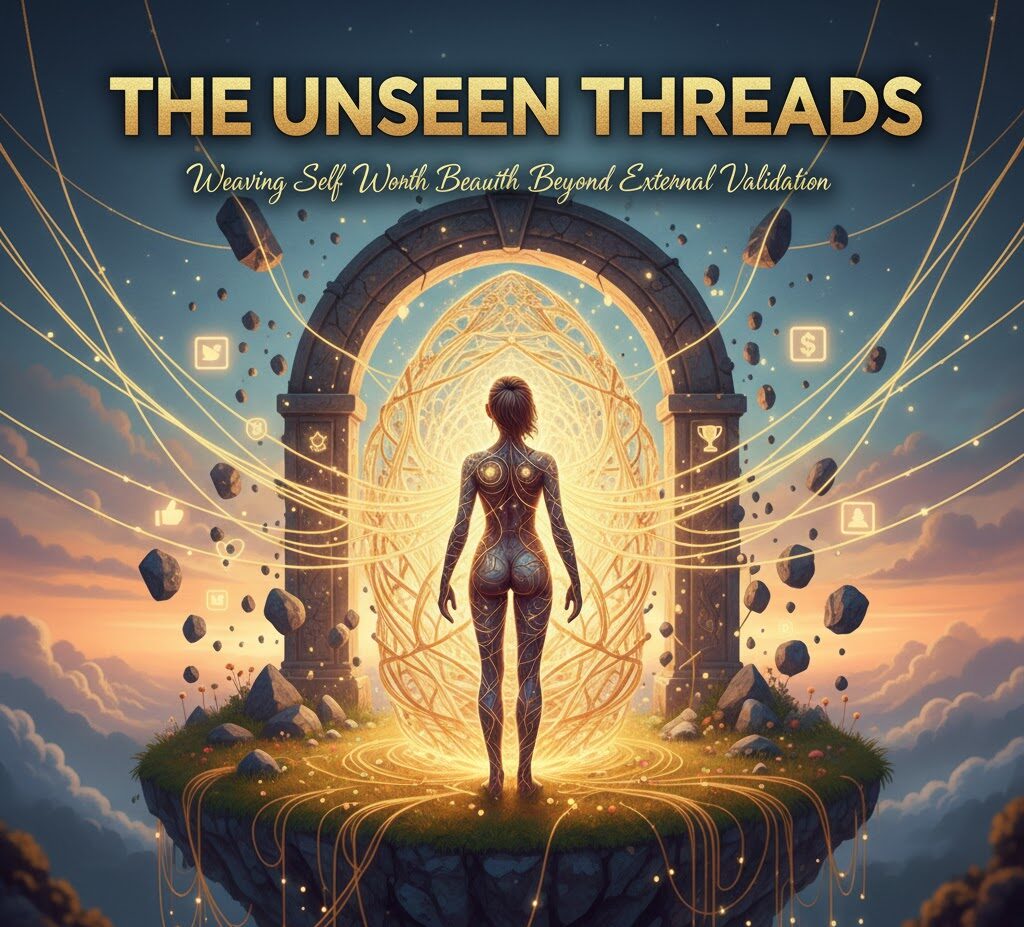
There are days, and I’ve had more than my share, when it feels like you’re just… spinning your wheels. You wake up, go through the motions, maybe even *try* to do the ‘right’ things – read the books, listen to the podcasts, journal a bit – but deep down, there’s this persistent whisper, a quiet hum of stagnation.
It’s that feeling of being perpetually on the cusp of something, yet never quite arriving. Like standing on a treadmill that’s barely moving, your legs are pumping, but the scenery never changes. This is where the journey of self-growth often leaves us feeling most perplexed, and frankly, a little bit alone.
We see others, or at least their curated versions online, seemingly leaping forward, transforming overnight, while we’re wrestling with the same old patterns, the same old doubts.
 This internal inertia isn’t a sign of failure. In fact, it’s often the most fertile ground for *real*, lasting change. The discomfort, the slow unraveling, the moments of profound confusion – these are the subtle currents that, over time, reshape the landscape of our inner world. We’re conditioned to expect dramatic transformations, those movie-montage moments where suddenly everything clicks. But life, and more importantly, genuine personal evolution, rarely works that way. It’s less about a sudden explosion and more about the slow, steady erosion of old habits and beliefs, replaced by new ones, so gradually that you barely notice until you look back and see how far you’ve come.
Why Growth Feels Invisible (And Why That’s Okay)
I remember a period a few years back. I was feeling this immense pressure to *be* more. More disciplined, more successful, more mindful. I’d set these ambitious goals, throw myself into them with a fierce, almost desperate energy, and then inevitably, I’d hit a wall. Not a loud, crashing wall, but a quiet, porous one. I’d just… deflate. The motivation would wane, the old habits would creep back in, and I’d find myself right back where I started, feeling even more disheartened. It was a cycle that felt less like growth and more like a frustrating loop.
The truth is, most of our significant internal shifts happen in the unseen spaces. They occur in the quiet moments of self-reflection, in the decisões we make when no one is watching, in the small acts of courage that don’t make headlines. When we’re waiting for the grand pronouncements, the sudden epiphanies, we miss the gentle unfolding that’s actually taking place. This is where self-awareness becomes your most potent tool. It’s about noticing the subtle shifts in your own energy, your reactions, your thought patterns. It’s about understanding *why* you gravitate towards certain behaviors, even when you know they’re not serving you. This inner noticing is the seedbed of change.
Think about it: learning to manage your temper, developing genuine patience, or cultivating a deeper sense of gratitude isn’t about a single, decisive action. It’s a thousand tiny choices made every day. It’s catching yourself before you lash out, choosing a calm response over an angry one. It’s consciously seeking out things to be thankful for, even when things are tough. These aren’t flashy achievements. They don’t win awards. But they are the bedrock of a more mature, resilient self. The slow, steady work of internal rebuilding.
The Common Pitfalls on the Path of Inner Development
We often approach self-growth like a project with a clear start and end date, or like a race to be won. This mindset leads us down a few well-trodden paths of frustration.
One of the biggest mistakes is **chasing external validation**. We might adopt new habits or beliefs because we think they’ll make us look good, or because we see others doing them. We want the *appearance* of growth. But true evolution comes from within. It’s about aligning your actions with your inner values, not with what you think others expect. When your drive comes from external approval, it’s a fragile foundation. The moment that validation disappears, so does the impetus for change. We have to learn to cultivate our own sense of worth, independent of applause.
Another common trap is **expecting perfection**. We set these impossibly high standards for ourselves. We think that to be ‘growing’, we must never stumble, never regress, never have a ‘bad day’. This is a recipe for burnout and self-recrimination. Growth is messy. It involves setbacks, moments of doubt, and times when you fall back into old patterns. The key isn’t to avoid these moments, but to learn from them. Can you treat yourself with compassion when you falter? Can you see a ‘mistake’ not as a failure, but as a valuable data point? This is the essence of resilience.
Then there’s the **dependency on motivation**. We wait for that surge of inspiration, that lightning bolt of ‘wanting’ to change. But motivation is fickle. It comes and goes like the tide. True commitment, the kind that sustains long-term evolution, is built on discipline and habit, not just fleeting feelings. It’s about showing up, even when you don’t feel like it. It’s about understanding that consistent, small actions, performed day after day, build momentum far more effectively than sporadic bursts of enthusiasm. Building solid habits is how we anchor our growth when motivation fades.
Busting the Myths: What Growth *Really* Looks Like
Let’s address some of the popular myths that cloud our understanding of personal evolution.
**Myth 1: Overnight Transformation is Real.** This is perhaps the most pervasive myth, fueled by highlight reels and dramatic success stories. While some people experience rapid shifts due to significant life events, for most of us, deep, lasting change is a slow burn. It’s the cumulative effect of thousands of small, intentional choices. It’s the gardener tending to a sapling, watering it, giving it sunlight, and patiently waiting for it to grow, rather than expecting a full-grown tree overnight.
**Myth 2: You Need to Be Motivated to Change.** As I mentioned, motivation is a beautiful bonus, but it’s not the engine of change. Discipline is. It’s the quiet commitment to your chosen path, regardless of how you feel on any given day. It’s the understanding that showing up for yourself, even when it’s hard, is what builds the muscle of character. Think of it like exercise; you don’t always *feel* like going to the gym, but you go because you know it’s good for you. The same applies to inner work.
**Myth 3: Self-Growth Means Being Positive All the Time.** This is a dangerous misconception. True self-growth isn’t about plastering a smile on your face and ignoring difficult emotions. It’s about acknowledging, understanding, and processing the full spectrum of human experience – the joy, the sorrow, the anger, the fear. It’s about developing emotional intelligence, the ability to navigate your inner world with honesty and compassion. Genuine maturity involves embracing the difficult emotions, not suppressing them.
**Myth 4: Growth is Linear.** We often imagine growth as a smooth upward trajectory. But the reality is far more nuanced. It’s a spiral, with periods of progress followed by moments of seeming regression or plateauing. These dips aren’t failures; they are opportunities to consolidate learning, to integrate lessons, and to prepare for the next phase of growth. The progress isn’t always visible, but the learning is always happening.
The Quiet Gifts: The Long-Term Impact of Inner Evolution
When we move past the frantic chase and embrace the slower, more deliberate process of personal evolution, the rewards are profound and far-reaching.
One of the most significant impacts is a **deepening sense of inner peace**. As you understand yourself better, as you learn to manage your reactions, and as you align your actions with your values, the internal noise begins to quiet. The constant striving, the anxiety about what others think, the self-judgment – these begin to recede. You find a sense of calm that isn’t dependent on external circumstances. This isn’t complacency; it’s a grounded contentment that allows you to engage with life more fully.
**Confidence** transforms. It’s no longer the brash, boastful kind that needs constant affirmation. It becomes a quiet, unshakeable knowing of your own capabilities and your own worth. It’s the confidence that comes from knowing you can handle challenges, that you can learn from mistakes, and that you are fundamentally okay, just as you are, while still striving to be better. This self-assuredness allows you to take more risks, to speak your truth, and to live more authentically.
**Decision-making** becomes clearer. When you have a strong sense of self-awareness and your core values, choices become less complicated. You’re less swayed by external pressures or fleeting desires. You can discern what truly aligns with your path and what doesn’t. This clarity saves immense energy and reduces the anxiety that often accompanies major life decisions. It’s like having a compass that reliably points you in the right direction.
In the emotional and social landscape of 2025-2026, this inner work is more crucial than ever. We live in an era of constant digital connection, where curated realities can breed comparison and inadequacy. Navigating this requires a robust internal anchor. The ability to discern truth from noise, to maintain emotional equilibrium amidst constant flux, and to connect genuinely with others – these are the skills forged in the fires of personal evolution.
Looking ahead, maturity isn’t about accumulating more accomplishments or reaching a certain age. It’s about deepening awareness, increasing adaptability, and cultivating a resilient spirit. It’s about the ability to approach life’s inevitable changes with grace, to learn continuously, and to contribute meaningfully to the world around you. This future outlook is built, brick by patient brick, on the foundation of the quiet, often unseen, work we do on ourselves today. The journey of self-growth is not a sprint; it’s a lifelong, unfolding dance with ourselves. And the most beautiful steps are often the ones no one else sees.
Frequently Asked Questions About Self-Growth
**Q1: I feel stuck in my life. What’s the first step to getting unstuck?**
A: Feeling stuck is a common part of the human experience. The first step isn’t a grand gesture, but a quiet observation. Ask yourself: What *exactly* feels stuck? Is it a career, a relationship, your own mindset? Without judgment, just notice. Then, try one tiny, different action. It could be a different route to work, a new book, or a brief conversation with someone unexpected. Small shifts can loosen the grip of stagnation.
**Q2: How do I know if I’m actually growing or just going through a phase?**
A: Real growth often feels less like a flash and more like a subtle shift in perspective or behavior that lasts. Ask yourself if you’re reacting to situations differently than you used to, if you’re more patient, more understanding, or if your core beliefs are subtly changing in a way that feels authentic to you, not just trendy. Genuine growth integrates into your being; phases tend to pass.
**Q3: I compare myself to others constantly. How can I stop this?**
A: Comparison is a thief of joy and a drain on your energy. Recognize that you are often comparing your ‘behind-the-scenes’ struggles with someone else’s ‘highlight reel’. When you catch yourself doing it, gently redirect your focus inward. What are *your* unique strengths? What progress have *you* made, no matter how small? Cultivate gratitude for your own journey. It’s a practice that takes time and consistent effort.
**Q4: Self-growth feels lonely. How can I find support?**
A: It can indeed feel like a solitary path, especially when the most significant changes are internal. Seek out genuine connections, not just superficial ones. This might mean finding a mentor, joining a small, like-minded group, or confiding in a trusted friend or family member who truly understands. Remember, you’re not alone in this journey, even if it sometimes feels that way. Many are walking a similar path.
**Q5: I try to be disciplined, but I always give up. What am I doing wrong?**
A: Discipline isn’t about brute force; it’s about building sustainable habits. Are your goals too big? Are you trying to change too many things at once? Start small. Pick one habit and focus on consistency over intensity. Celebrate small wins. And crucially, practice self-compassion when you falter. A slip-up isn’t a failure; it’s just part of the process. Pick yourself up and continue. The path to focus often requires understanding how to manage distractions; this approach can be a helpful guide.
**Q6: Is it okay to not want to change sometimes?**
A: Absolutely. Growth isn’t a constant state of wanting to be different. There are seasons for introspection, for rest, for simply *being*. Forcing change when you’re not ready can be counterproductive. Listen to your inner signals. Sometimes, the most profound growth happens when you allow yourself to pause and simply exist in the present moment, without pressure.
**Q7: How do I deal with my past mistakes and regrets?**
A: Our past can weigh heavily, but it doesn’t have to define our future. Acknowledge your past actions and the lessons they hold, but then consciously choose to shift your focus to the present and future. Practice forgiveness – for others, and most importantly, for yourself. Your past experiences have shaped you, but they don’t dictate who you must become. Learn, integrate, and move forward with newfound wisdom.
**Q8: What’s the difference between self-improvement and self-growth?**
A: Self-improvement often focuses on external markers – getting a better job, acquiring a new skill, looking a certain way. It’s about *doing* more or *being* better in a tangible sense. Self-growth, on the other hand, is a deeper, more internal process. It’s about increasing awareness, emotional maturity, understanding your own nature, and evolving your fundamental way of being in the world. While improvement can be a part of growth, growth is more about the *being* than the *doing*. You can learn more about embracing a holistic approach to personal development at Jamgro.