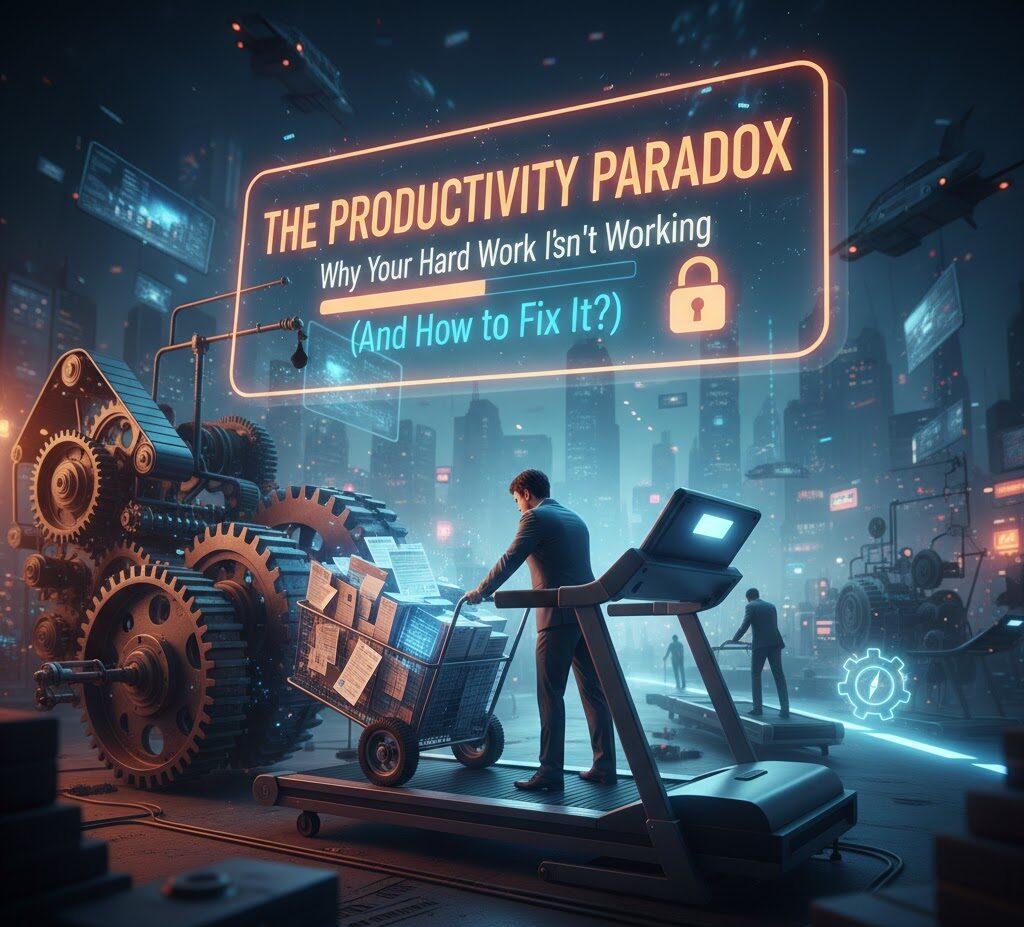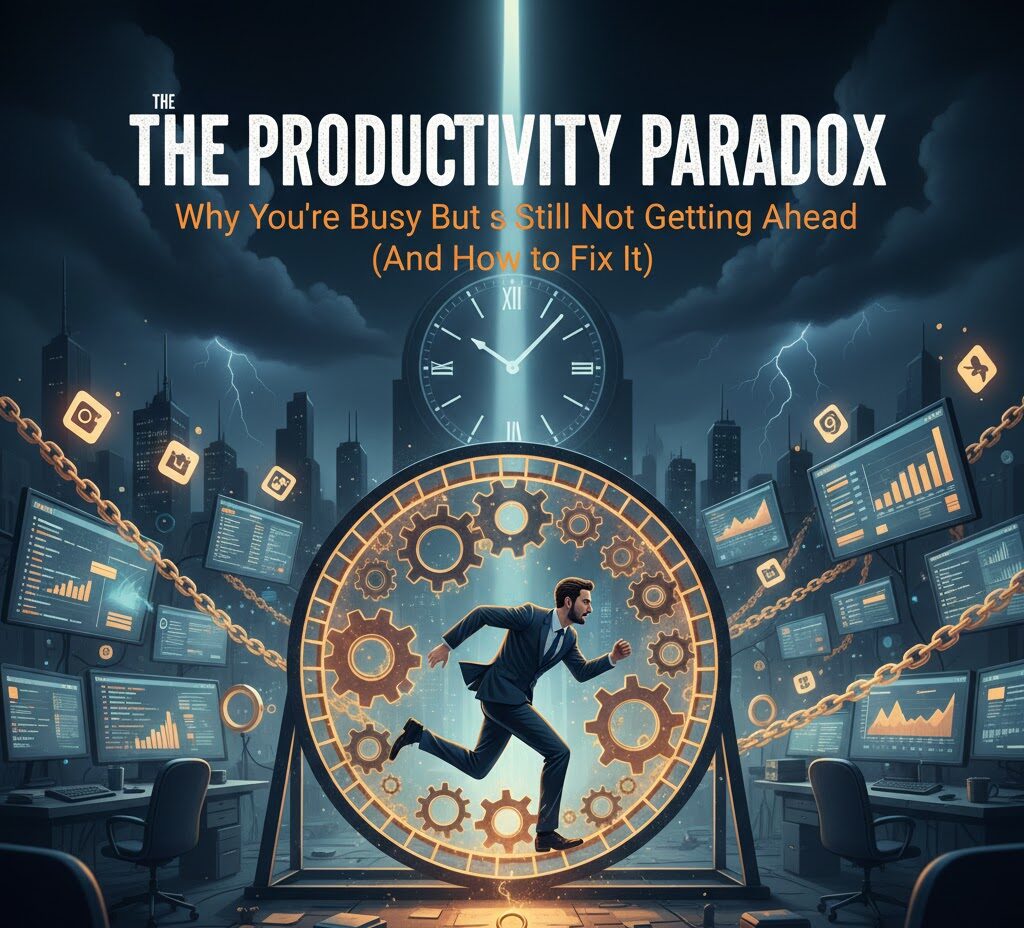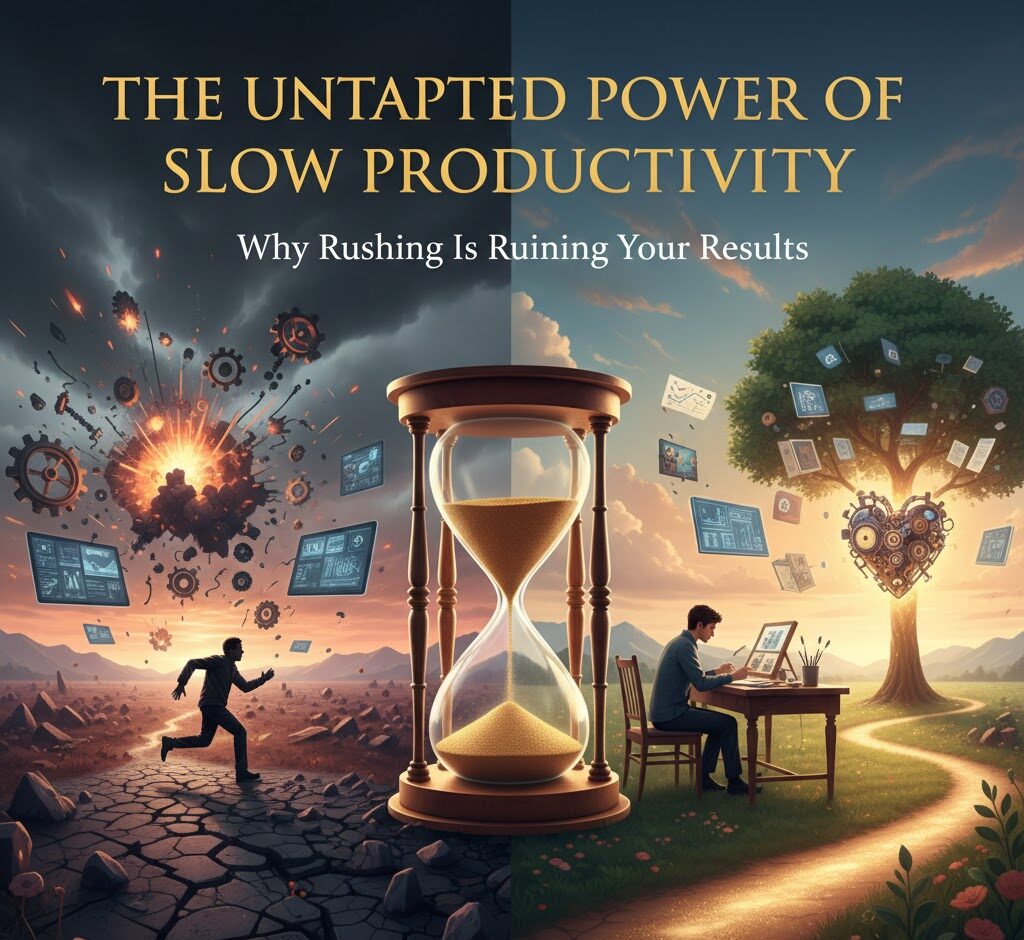
Ever feel like you’re running a marathon…in quicksand? You’re *constantly* busy. Your to-do list is a mile long. You’re juggling calls, emails, and meetings. Yet, at the end of the day, you look back and think, “What did I actually accomplish?” Welcome to the Productivity Paradox. It’s the frustrating reality that being busy doesn’t guarantee you’re being productive. In fact, all that frenetic activity can often be a smokescreen, masking a lack of real progress and, worse, setting you up for burnout. This is where productivity silently collapses, and the impact can be felt across your work, your income, and even your mental health.
The Crushing Weight of Modern Productivity
Let’s be real. The modern work environment is a battlefield. We’re bombarded with information, notifications, and demands on our time. Digital distractions are everywhere. As a result, many people struggle to maintain focus and accomplish tasks. It’s a never-ending cycle of:
- Checking emails (again)
- Attending back-to-back meetings
- “Quickly” scrolling through social media
- Multitasking (which, spoiler alert, doesn’t work)
This is where productivity silently collapses.
Most people stay busy but avoid the core work that drives real results. They confuse motion with achievement. They’re like hamsters on a wheel: a blur of activity, going nowhere.
Why Productivity Breaks Down: The Silent Saboteurs
So, what’s really going wrong? Why does “busy” sabotage “productive?” Here are some of the biggest culprits:
- Information Overload: Our brains weren’t designed to process the constant firehose of data we face daily. Emails, news alerts, social media – it’s a lot, and it drains your cognitive resources.
- Poor Planning: A lack of clear goals and a well-defined plan is a recipe for wandering aimlessly. Without a roadmap, you’re easily sidetracked by urgent but unimportant tasks.
- Multitasking Myth: The human brain can’t truly multitask. You’re just rapidly switching between tasks, which kills focus and slows you down.
- Lack of Boundaries: The lines between work and personal life have blurred. Without clear boundaries, you’re always “on,” leading to exhaustion and burnout.
- Perfectionism: The constant drive to make everything perfect can be paralyzing. It leads to procrastination and a fear of starting, or finishing, anything.
- Digital Distraction: Emails, social media, and other digital platforms can fragment your attention and reduce your ability to concentrate. Studies have shown that it takes an average of 23 minutes and 15 seconds to regain focus after being distracted.
The Sustainable Productivity System: Work Smarter, Not Harder
Real productivity starts when you shift from just *doing* to being *strategic*. It’s about working smarter, not harder. Here are some tested systems you can use to transform your output:
1. Master the Art of Planning
Most people rush into action without a solid plan. Stop that. Before you do anything, take time to define your goals, break them down into smaller tasks, and create a realistic schedule. Some of the most successful productivity systems incorporate an element of planning.
- Prioritize ruthlessly: Not all tasks are created equal. Use methods like the Eisenhower Matrix (urgent/important) or the ABCDE method to focus on what matters most.
- Time Blocking: Schedule specific blocks of time for specific tasks. Treat these appointments with yourself as non-negotiable.
- Review and adjust: Life happens. Regularly review your plan and adjust as needed.
2. Conquer the Chaos of Time Management
Time is your most valuable resource. Managing it effectively is crucial. Here’s how to wrestle back control:
- The Pomodoro Technique: Work in focused 25-minute bursts, followed by a short break. This helps you maintain concentration and prevents burnout.
- Batch Similar Tasks: Group similar tasks together (e.g., answering all emails at once, making all phone calls at once).
- Learn to Say “No”: Protect your time. It’s okay to decline requests that don’t align with your priorities or overload your schedule.
3. Create “Deep Work” Zones
Deep work is the ability to focus without distraction on a cognitively demanding task. It’s where your best work happens. To cultivate it:
- Eliminate Distractions: Turn off notifications, close unnecessary tabs, and find a quiet space.
- Schedule Deep Work Time: Block out specific periods for focused work, treating them as sacred.
- Communicate Your Needs: Let others know when you need uninterrupted time.
4. Manage Your Energy, Not Just Your Time
Productivity isn’t just about time; it’s about energy. If your energy is low, your output will be, too. It’s a common mistake, overworking without results.
- Prioritize Sleep: Aim for 7-9 hours of quality sleep per night.
- Fuel Your Body: Eat a healthy diet that supports your energy levels.
- Move Your Body: Regular exercise boosts energy and reduces stress.
- Take Breaks: Step away from work to recharge. Short breaks can significantly improve your ability to concentrate.
5. Optimize Your Digital Habits
The digital world can be a productivity killer, but it doesn’t have to be. Implement these strategies:
- Set Boundaries: Define specific times for checking email and social media.
- Use Website Blockers: Limit access to distracting websites.
- Unsubscribe: Reduce inbox clutter by unsubscribing from irrelevant newsletters.
Common Productivity Mistakes to Avoid
Even with the best systems, it’s easy to fall into counterproductive traps. Here’s what to watch out for:
- Multitasking: Stop it. It’s a myth, not a method.
- Perfectionism: Strive for excellence, not perfection. Embrace “good enough” to get things done.
- “Hustle Culture”: Overworking doesn’t equal success. Prioritize rest, recovery, and balance.
- Ignoring Mental Health: Your mental health is key. Prioritize self-care, and seek help when needed.
- Lack of Breaks: Taking breaks is not a sign of weakness, but a sign of strength and self-awareness. It’s essential for preventing burnout.
The Long-Term Impact: Beyond the To-Do List
Sustainable productivity isn’t just about getting more done. It’s about:
- Increased Performance: Improved focus, better decision-making, and higher-quality work.
- Higher Income: When you’re more effective, you can achieve more, which can impact your income.
- Better Mental Health: Reduced stress, less anxiety, and a greater sense of control.
- Improved Well-Being: More time for relationships, hobbies, and personal growth.
Remember, true productivity isn’t about cramming more into your day. It’s about being more intentional, focused, and effective.
The Future of Sustainable Productivity: What’s Next?
In 2026, the work landscape continues to evolve. Here’s what to anticipate:
- AI Integration: Learn to leverage AI tools to automate tasks, summarize information, and free up your time.
- Focus on Well-being: Prioritize mental and physical health as core components of your productivity strategy.
- Flexible Work: Embrace remote work and flexible schedules to optimize your work-life balance.
- Continuous Learning: Stay updated on the latest productivity techniques and tools.
The key is to adapt and be proactive, not reactive. Create a system that works for you, and remember that [Jamgro](Jamgro) offers resources to help you achieve these goals.
FAQ: Your Productivity Questions Answered
Here are some of the most common questions about productivity:
- How do I stop procrastinating?Break large tasks into smaller steps. Set realistic deadlines. Reward yourself for completing tasks, not just for the end result. Find the underlying cause of your procrastination, and tackle that.
- How can I improve my focus?Minimize distractions, practice mindfulness, and use the Pomodoro Technique. Plan your day and stick to it.
- How do I manage information overload?Filter information ruthlessly. Unsubscribe from unnecessary emails. Schedule time for processing information, not just receiving it. Prioritize your tasks.
- What’s the best way to prioritize tasks?Use methods like the Eisenhower Matrix, or the ABCDE method. Make a to-do list and determine the level of importance of each task, with the highest priority task at the top.
- How do I avoid burnout?Set clear boundaries, prioritize self-care, take regular breaks, and delegate tasks when possible.
- Is multitasking a good idea?No. Multitasking is a myth. It reduces productivity and increases stress.
- How do I create a sustainable work-life balance?Set clear boundaries between work and personal life. Make time for self-care, prioritize important tasks and delegate where possible, and unplug regularly.
- Where can I find additional resources for improving my productivity?Start with [Jamgro](The Overthinking Trap: How to Break Free and Reclaim Your Mind) for further articles and insights.